Belize is probably the most unique country on any trip through Central America. Whilst other countries carry a strong Spanish influence, Belize only gained its full independence from the UK in 1981. For this reason, their primary language is English, and they carry a strong Caribbean culture. They pride themselves on ‘going slow’ and living life in the most relaxed way possible, with a clear, calm mind valued far higher than any materialistic desires.
Your first stop here is likely to be Caye Caulker, which is a tiny island just off the coast of Belize City. You can comfortably walk from one end of the island to the other in 20 minutes or so, and even then everything you are likely to want to go to is concentrated in the northern half of the island.
There are 3 hostels on the island which means in total only 100 or so backpackers can come here, so you will need to book a little further in advance if you want to save yourself from extortionate hotel prices. Bella’s is the most well-known hostel and established hostel, running events like Sunday funday and family dinners as well as daily snorkelling tours. Whilst I’ve had mixed reviews about the hostel itself, this is probably the best place to stay with Oasis in second.
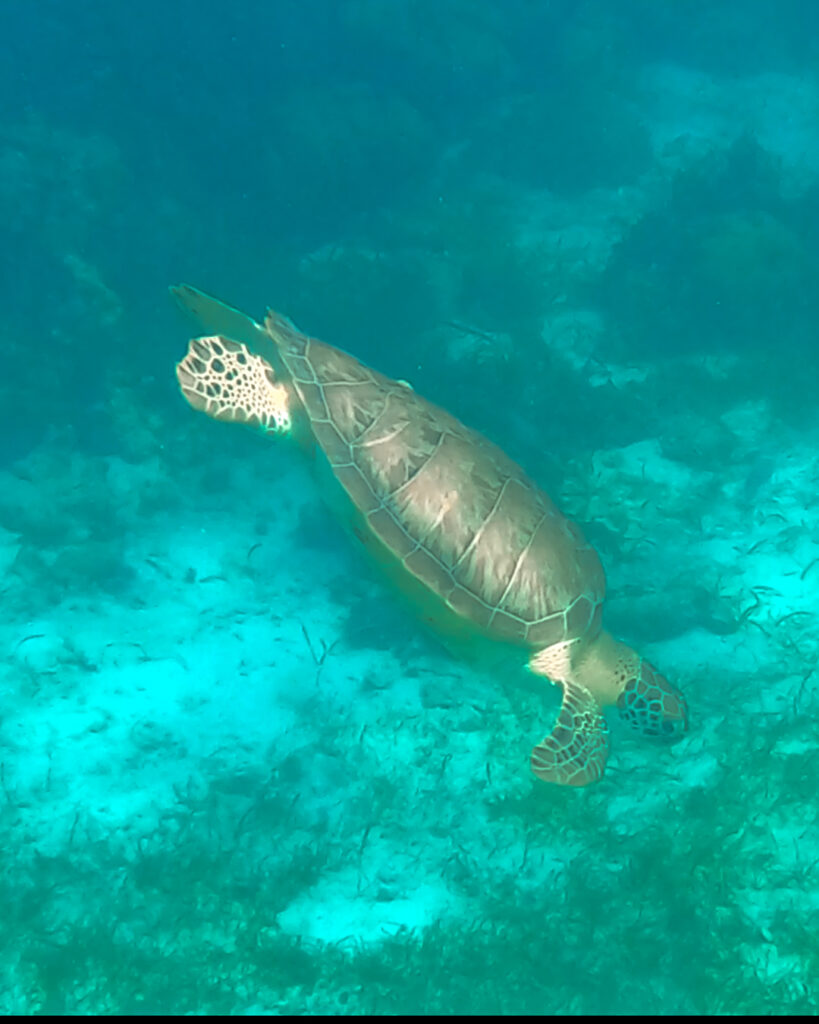
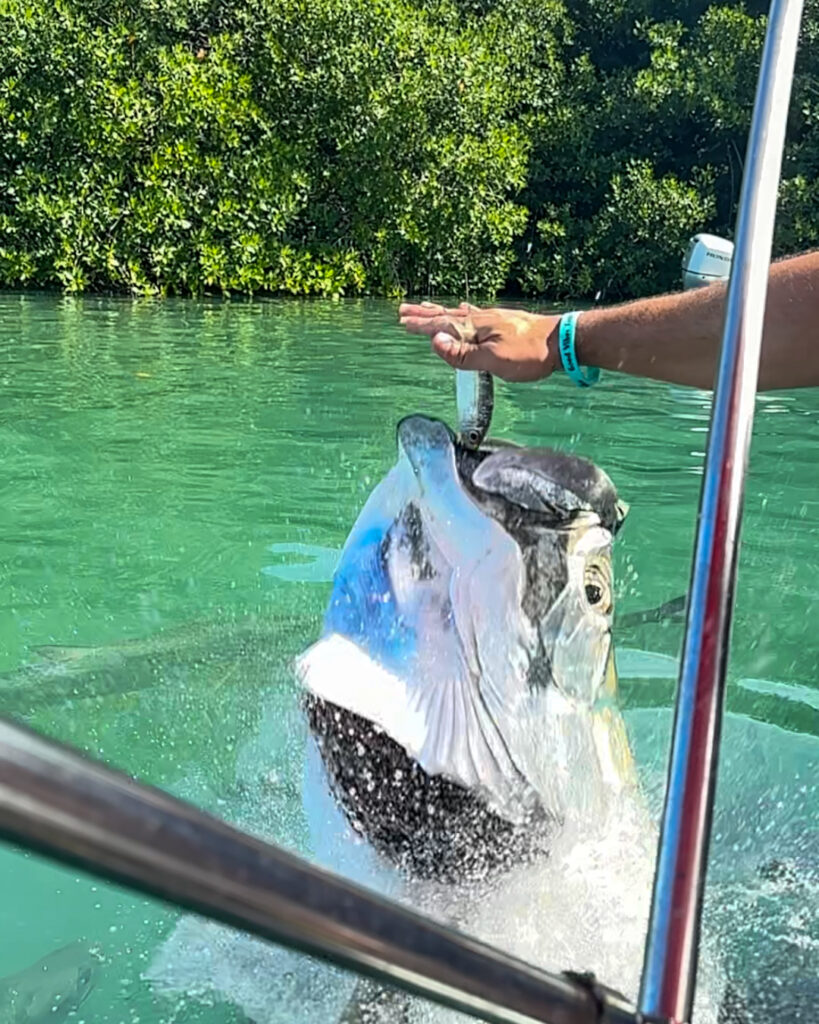
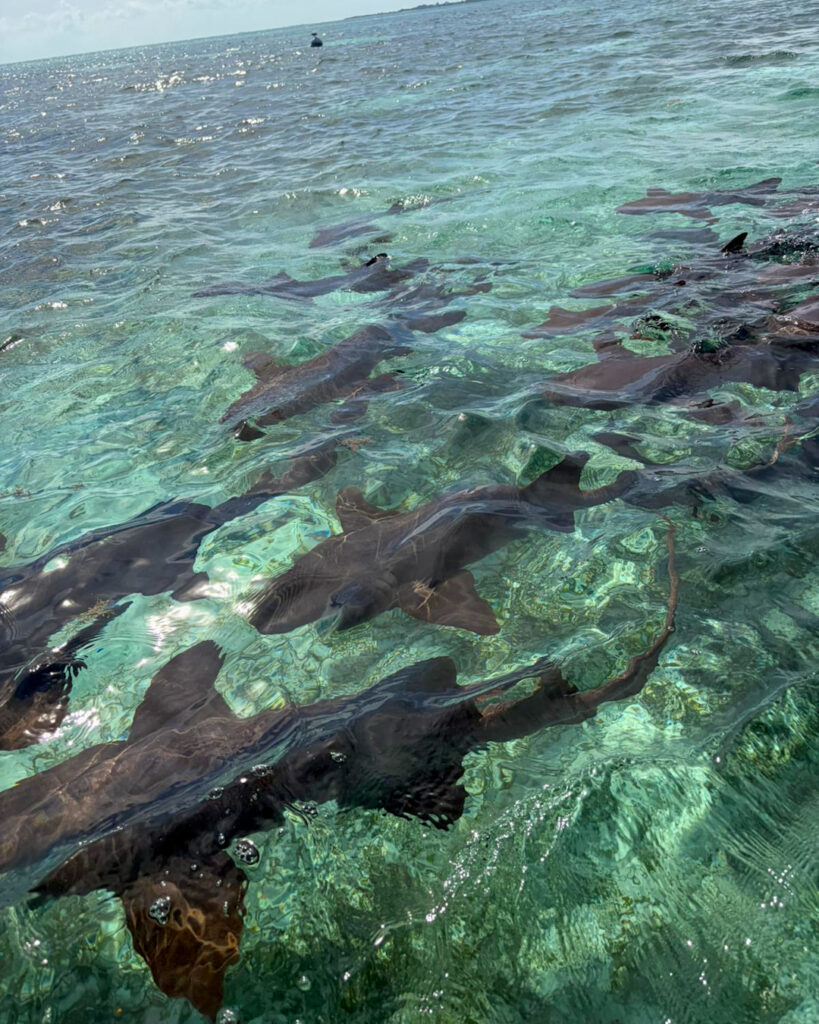
The main activity to do here is snorkelling, as there are several very good spots to see turtles, nurse sharks and sometimes even manatees. Both full and half-day tours are available, and for me, the half-day presents far better value for money. The half-day tour is 4 hours long, covers the best 4 snorkel spots, tarpon feeding and has fruit and rum punch included for 45 USD, and the full day adds on 2 hours, two more stops and lunch and is 90 USD. If you book through Bella’s they also provide a GoPro which someone in the group can use to take photos and videos, which are then sent to you a couple of days later, free of charge. It is worth noting that you don’t see the nurse sharks as organically as I would like. They know that if they go to a certain spot, then the snorkelling boats will come along and feed them, and as soon as they stop putting sardines in the water, all of the sharks leave. There are tours which don’t do that, but from what I have heard, they are usually just piggybacking off of a tour that does, which for me doesn’t change much.
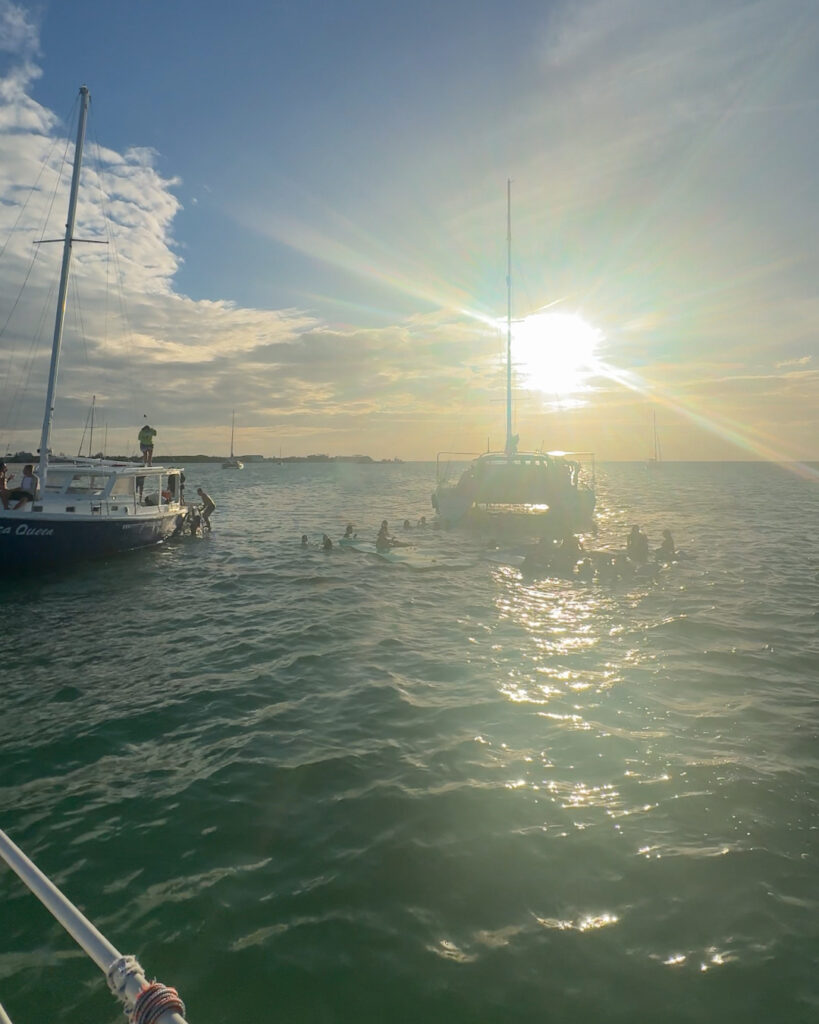
If you want to party, then you have to be here on a Sunday as this is Bella’s Sunday funday and is the only real party on the island. It is 45 USD to enter and includes free rum punch for the pre-game at the hostel and for the full boat party. They then throw an after-party at the hostel, and often people continue to some of the bars afterwards.
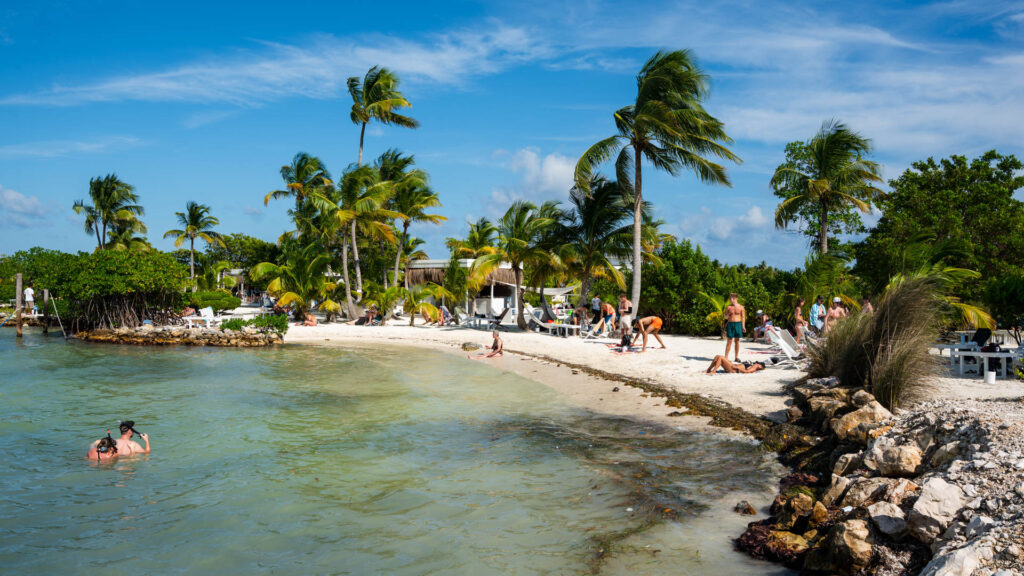
The main issue I had with Caye Caulker is the lack of beaches. Simply put, there are none. If you want to relax during the day, there is a bar called the Split, which is located on a dock at the northernmost point of the South Island. Called the split because it is located on the ‘split’ between the north and south islands. They have a 6-meter jumping platform and some tables in the water, but sunbathing on a chair on a concrete dock just doesn’t have the same island vibe as walking onto a sandy beach.
There is a small beach on the north island called Bliss beach which also has a free beach club. Getting here is a little tricky; you either need to rent a bike, catch the short ferry across the split and cycle 20 minutes to the far north of the northern island, or there is a private ferry which will take you to and from the South Island spright to Bliss Beach’s dock. This costs 15 Belize dollars each way though. Even here, the beach is pretty small. The club is free, but they do ask that you buy something from the club in return. The food and drinks here did look pretty good, but the prices were not backpacker-friendly by any means; double that of the rest of the island.
In general, the whole island isn’t cheap though; the cheapest lunch I could find was 15 Belizean dollars and an average dinner was 25-35. Of course, this is still cheap in comparison to Europe but compared to the surrounding countries in Central America it is not.
Caye Caulker is also home to a bucket list activity: flying over the Great Blue hole. If possible, book the copilot seat, as for me, this made the experience so much cooler. The flight is done in a tiny plane with just a single propeller and a capacity of 20 or so passengers. By being in the copilot seat, you get to have the same view as the pilot and watch everything they do for takeoff and landing and have a far better view of everything you fly over. Trust me when I say the view for landing from the cockpit is unbelievable, or as they say in Belize ‘unbelizeable’. For me, flying over the big blue hole was pretty underwhelming; it just looks like, well, a big blue hole. However, the flight itself is spectacular. The water here is crystal clear, and as you fly over the ocean at between 500 and 1000 feat you see the water change colour as the depth of the sea floor changes. From looking over coral reefs to a beautiful turquoise to a darker ocean blue, and back through them all again as you fly past different islands. This will of course, hurt the budget a little at roughly 250 USD for a normal spot and 295 for the copilot. Worth every penny for me.

For food, there are BBQs everywhere on the island selling Jerk or BBQ chicken, pork chops or lobster, usually accompanied by rice, beans and coleslaw. While every one of the were amazing, we found ourselves returning most often to Otis’ as this was the cheapest and similar in quality, and Kareem’s as this was closer to a restaurant with chairs and tables to sit and socialise over dinner. For breakfast, the best spot is Ice n Beans; the food here is fantastic for everything from bagels and smoothie bowls to fryjacks and omelettes. They even offer you a free doughnut and an iced coffee shot on arrival. It is pretty expensive, though.
Right across the road is the magic cup, which isn’t quite as good but is far more affordable; they are also open pretty late at night, so if you need a top-up on the way to or from the bars this is the place to stop.
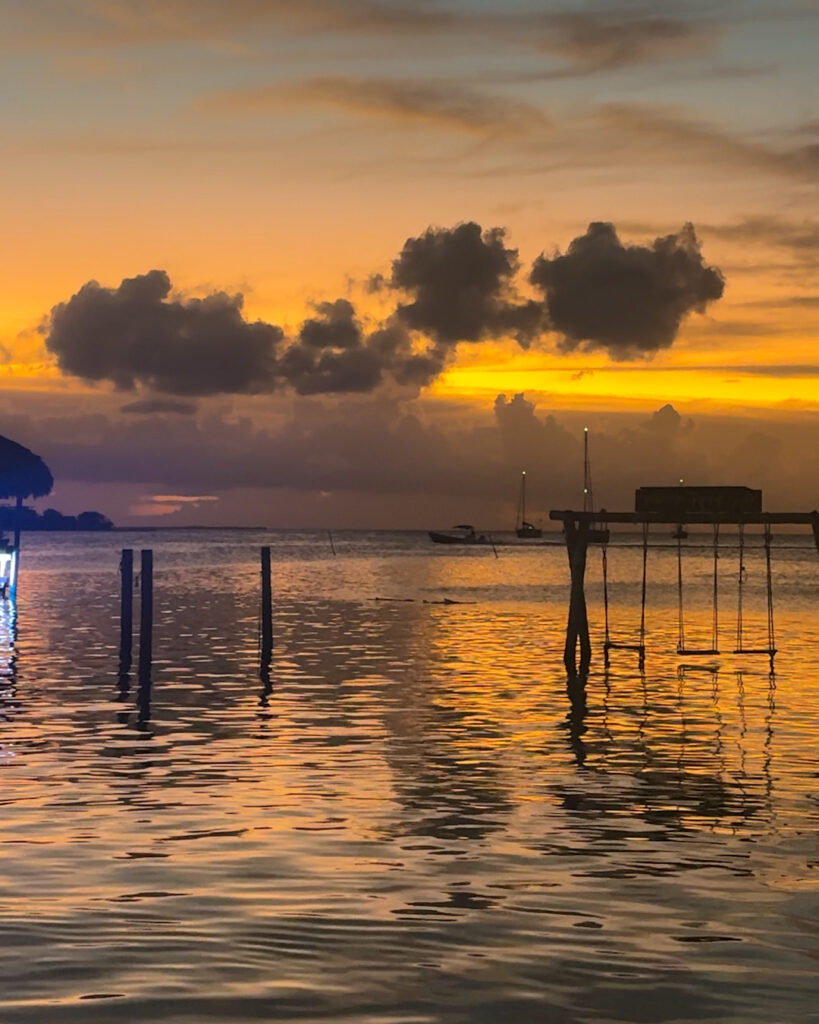
For sunset there is only one place to be, and that is at Stingray Beach. Late at night, all of the stingrays come into the shallow water, and you can see them all swimming around right on the beach. From here, you also have the best view out across the docks and swings to the sunset behind.
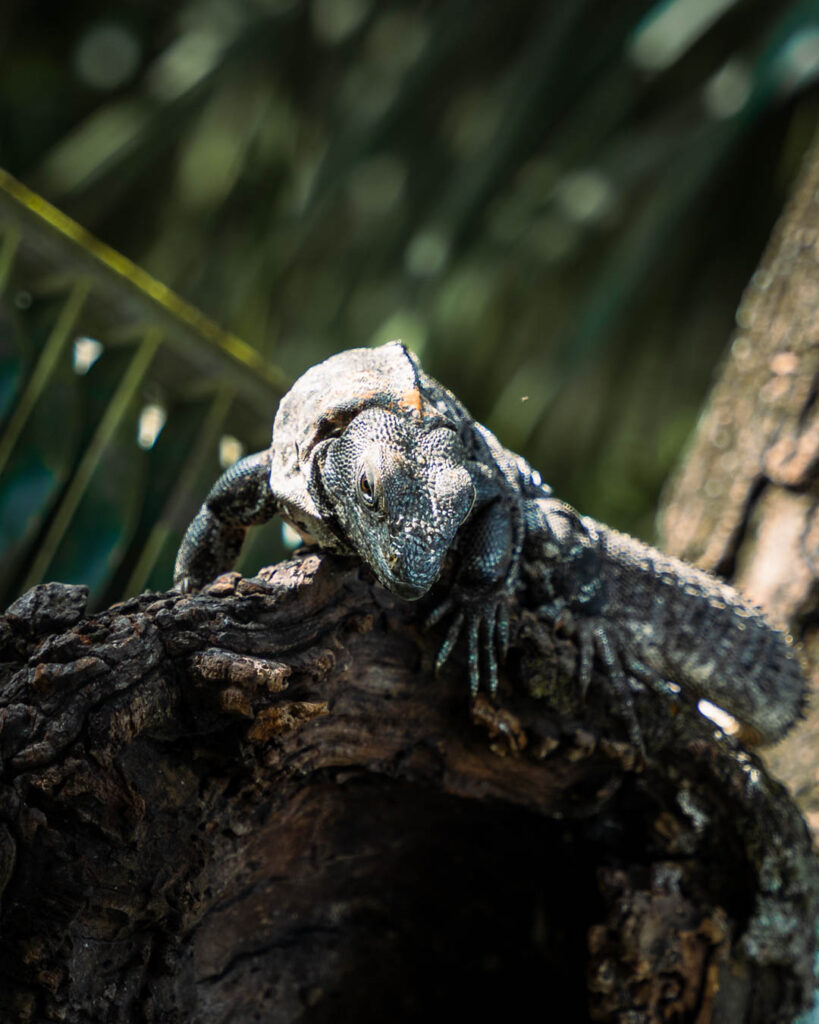
From here I went to San Ignacio, a small town very close to the Belize-Guatemala border. Here I stayed at the old house hostel, which was perfect for what I needed. It has a very chilled out vibe with balconies on both the front and back of the hostel with sofas, hammocks and a pool table. It is located right on the edge of the jungle, and so from the back balcony we would frequently see iguanas and several kinds of birds hanging out in the trees just a few feet away. There is a Bella’s hostel here aswell which was far more raucous but also came with good reviews. You’ll find San Ignacio far more affordable than Caye Caulker, with several street food spots which pop up here and there every day. They don’t seem to keep the same spots, but I found a woman selling 4 tostadas for 1 Belize dollar. In the market, there is also a papusa stall called Damaris papusas, which are unbelievable. On a Wednesday and Sunday night, the taco shop next to the Old house opens for a couple of hours in the evening, and apparently this is the best food you’ll get in the area. They open with a certain amount of food and close once they’ve sold it all, and the whole time they are open, there will be a queue of locals, which is always a good sign. I only heard about it after I had eaten dinner though so I didn’t get the chance to try them.
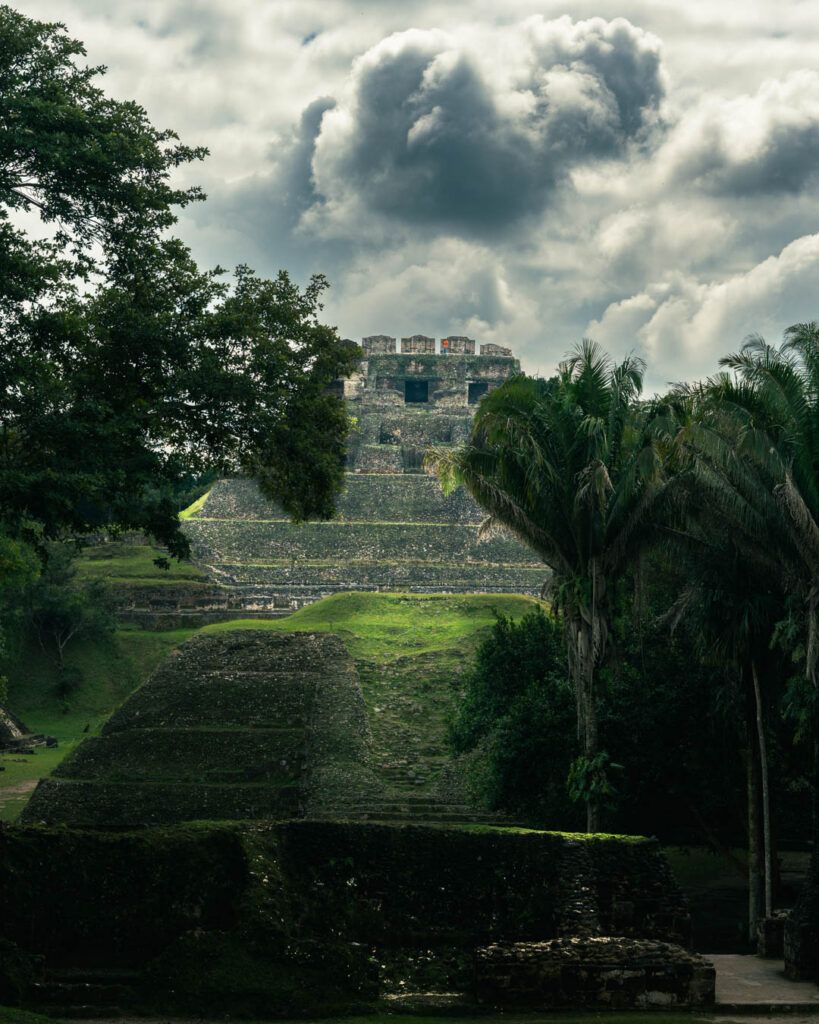
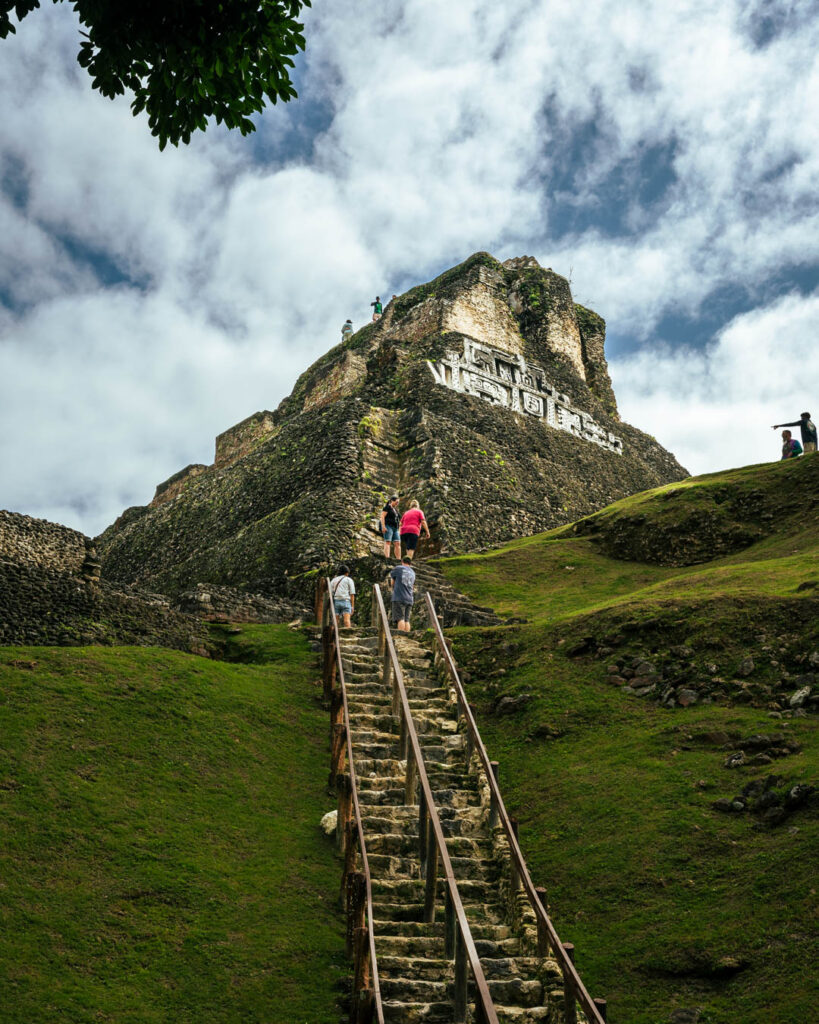
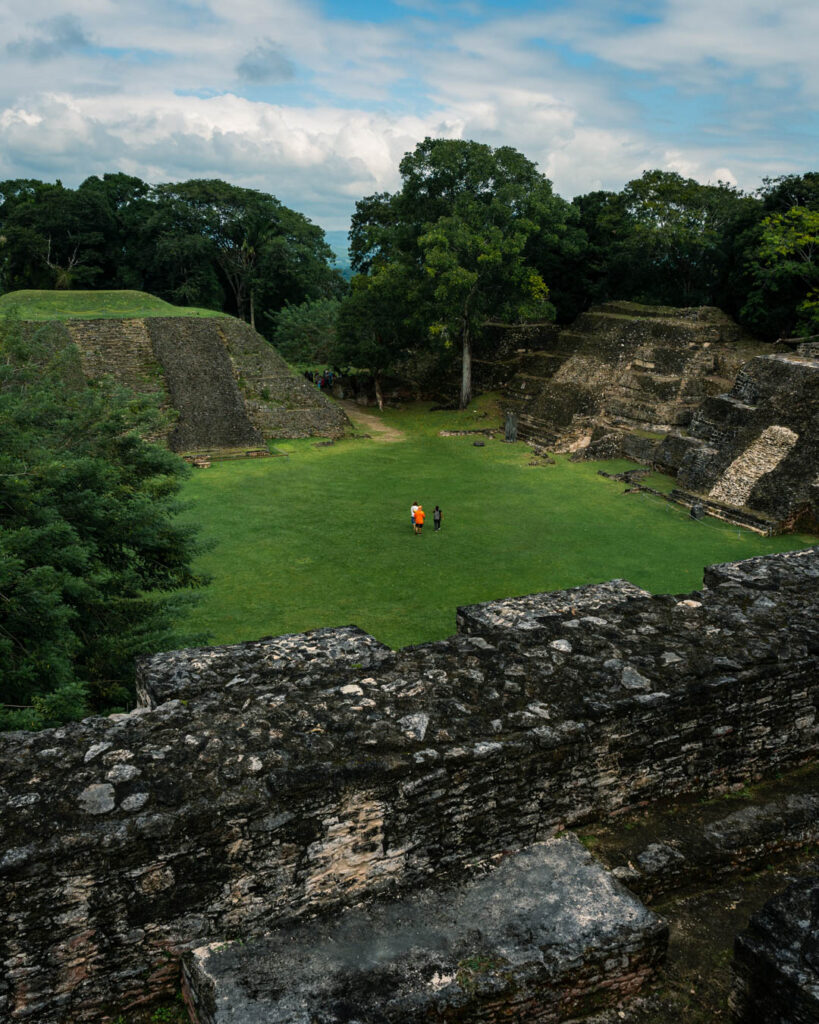
There are only really 2 things to do here, which are the ATM caves and the Xunantunich ruins. The Xunatunich ruins are accessible by public bus or taxi for 2.5 or 10 Belize dollars each way, respectively. From where they drop you off, you have to take a free ferry across the river and then take a further taxi the remaining 1 mile to the ruins. Often, the tour guides will position themselves at the ferry to offer you the double up of the taxi and tour guide.
These ruins are pretty big, taking me a couple of hours to walk around and take photos. They are also all climbable, and the views from the top of the surrounding jungle are stunning. Here they have done some restorations on the facades at the top of one of the pyramids. These are pretty obvious from the vastly different colour of the rock, which I found pretty weird, as the old facades are supposedly still in reasonable condition directly behind these restored ones.
The other stop is the ATM caves. The price for this tour is 120 USD, which was almost enough to scare me off, but I did go in the end, and it was very much worth it. The tour company that the Old House hostel uses would be the only company I would go with, though. They pick you up at 6:30 Am and head straight to the caves; from the car park, it is a 40-minute walk through the jungle, crossing the river 3 times on your way. You then swim into the cave entrance and walk, climb and swim deep into the cave to get to the artefacts. The caving nowadays is pretty easy with several children and more senior adults able to keep up pretty easily; they have taken out a lot of what the tour used to include because tourists found it too hard, and so now the tour is accessible to almost everyone. You are provided a life jacket and helmet, but you still need to be observant at all times, as there are rocks in the water which are pretty easy to bash a leg on. At the end, you climb into a higher section of the cave where all of the Mayan artefacts are. This includes musical instruments, pots and human remains.
The reason I say I would only go with my guide is that he was potentially the best tour guide I have ever had. he takes you into the cave as the first people of the whole day, so you get to see the water in its pristine condition, which is simply beautiful. Beneath the water are sedimentary rocks which get kicked up as more and more people enter the cave, and so by the time we were leavin,g it was almost unrecognisable. He had been completing the tour for 24 years and also worked with several research and archaeological teams both in the ATM cave and various other caves, ruins and historical sites around the area, and his passion and knowledge here was incredible. He spoke with such enthusiasm about everything from the type of plants and animals you see on the hike through the jungle, and the different ways they poison or harm you, to the formation and exploration of the caves and their component rocks and finally in detail about the history of the Maya in the caves. Detailing how the Maya would physically deform their royal children to make them seem deity-like. As well as how, who and why people were sacrificed here and the meaning behind doing it in this cave compared to other places etc etc. He truly made the experience.
A couple of things that are worth noting are that you must wear shoes into the cave, sandals are okay, but not flip flops or sliders. These shoes will get soaked because of the swimming and river crossings I mentioned, so make sure you’re okay with the shoes you wear getting wet – I didn’t know this and ended up spending the next week trying to dry out my shoes. Jordans on hostel balconies. Also, you are unable to take anything into the cave. No cameras, phones, food etc which is why I have no photos to show for the tour. You only need to bring a towel and a change of clothes, which will be kept in the van whilst you are in the cave.
You really only need 2 or 3 nights to stay here and do the tour excursions I’ve mentioned, as beyond that, there isn’t a huge amount to keep you entertained. If you’re doing any kind of work whilst travelling, though this could be a good place to chill out and focus for a couple of days.