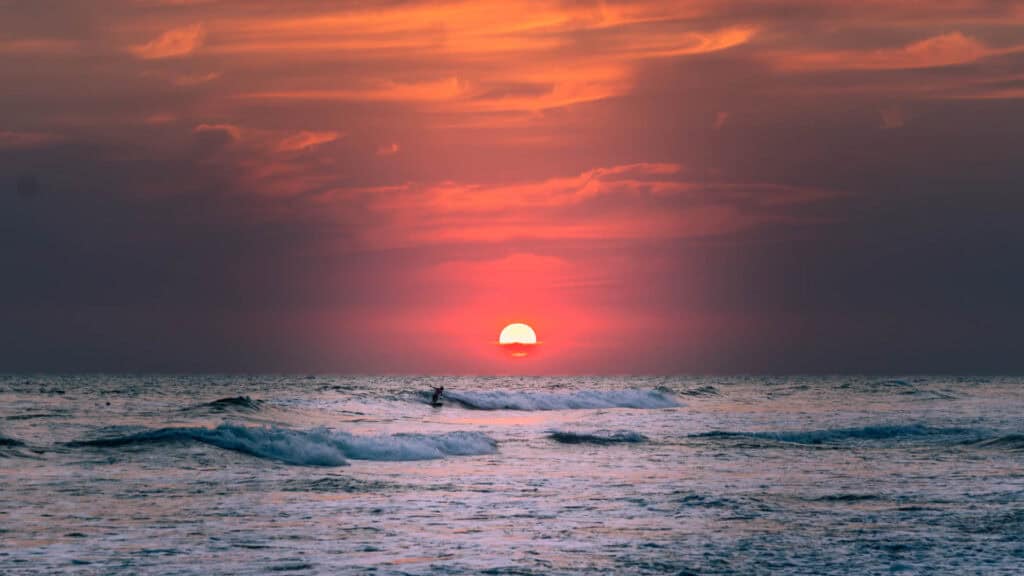
Antigua Guatemala is one of the most visited destinations in Central America — and for many travellers, it’s the natural starting point for exploring the country. If you’re planning a trip and wondering about the best things to do in Antigua, how many days to stay, what it costs, and whether it’s actually worth visiting, this guide covers everything you need to know.
Just an hour from Guatemala City’s airport, Antigua is easy to reach and even easier to settle into. Cobbled streets run between pastel façades, colonial churches rise from quiet plazas, and volcanoes dominate the skyline in almost every direction.
On the surface, it feels effortless.
Relaxed mornings wandering courtyards and coffee shops. Afternoons drifting between ruins, markets, and rooftop terraces. Evenings where the city slows down and people gather to watch the sun disappear behind the mountains.
But Antigua isn’t just beautiful.
It exists in the shadow of something much bigger.
Three volcanoes frame the city — Volcán de Agua, Volcán Acatenango, and the constantly erupting Volcán de Fuego. Seeing them from the streets below changes the way the city feels. The scenery isn’t just decorative — it’s dynamic.
For many travellers, that landscape becomes the reason they come here in the first place. Antigua is the main base for hiking Acatenango, the nearly 4,000-metre volcano where hikers camp overnight to watch neighbouring Fuego erupt through the night.
It’s one of the most unforgettable experiences in Guatemala — and if you’re considering it, you can read my full breakdown of the climb here:
How hard the Acatenango hike is and whether it’s actually worth it.
But even if you never climb a volcano, Antigua has a way of stretching your stay longer than planned.
Some travellers arrive for two nights and leave a week later. Between coffee farms, Spanish schools, colonial ruins, rooftop bars, and easy access to volcano hikes, it’s the kind of place where time slows down just enough that moving on suddenly feels less urgent.
If you’re heading to the coast after Antigua, here’s my honest breakdown of whether El Paredón is worth visiting and if it’s worth adding to your route.
Polished. Popular. Photographed endlessly.
And yet, somehow, it still delivers.

Antigua Guatemala Quick Facts
- Best For: Volcano hikes, cafés, colonial architecture, slow travel
- Recommended Stay: 4 nights
- Altitude: Approximately 1,500 metres
- Main Attraction: Hiking Acatenango and watching Volcán de Fuego erupt
- Budget: One of Guatemala’s more expensive destinations
- Nearest Airport: Guatemala City (around 1 hour away)
Quick Guide to This Article
- Getting to Antigua Guatemala
- Is Antigua Guatemala Worth Visiting?
- Why Antigua Is the Best Base for Hiking Acatenango
- Hiking Acatenango from Antigua
- What Antigua Is Actually Like for Most Backpackers
- Best Things To Do in Antigua Guatemala
- How Many Days To Spend in Antigua Guatemala
- Where To Stay in Antigua Guatemala
- FAQ
Getting to Antigua Guatemala
For most travellers, Antigua is the first stop in Guatemala. Located around an hour from Guatemala City’s international airport, it’s one of the easiest places in the country to reach.
The most common option is booking a shuttle directly from the airport to Antigua. Many hostels, hotels, and tour companies can arrange transfers in advance, while private taxis are also available.
I arrived from Semuc Champey after a long shuttle journey across the country, but most people I met were either flying directly into Guatemala and transferring straight to Antigua or beginning their trip here before moving on to Lake Atitlán, El Paredón, or Flores.
While Guatemala City does have attractions of its own, relatively few backpackers spend significant time there. At the time of my visit, ongoing security concerns and political unrest meant many travellers preferred to head directly to Antigua instead.
Once you’re in Antigua, the city is compact enough that you’ll rarely need transport again. Most places are within walking distance of Central Park.

Is Antigua Guatemala Worth Visiting?
Antigua isn’t just Guatemala’s most famous city — it’s also one of the most well-rounded destinations in the country.
Within a compact, walkable area, you get a rare combination of history, culture, and adventure. The city’s colonial architecture, preserved ruins, and colourful streets reflect centuries of history, while its cafés, restaurants, and markets give it a lively modern energy.
At the same time, Antigua sits at the centre of one of the most dramatic landscapes in Central America. Volcanoes rise in every direction, creating a backdrop that feels constantly present rather than simply scenic.
That setting turns the city into a natural hub for exploration. From here you can hike active volcanoes, visit nearby coffee farms, study Spanish, or simply spend a few days wandering historic streets that have barely changed in centuries.
Antigua can be slow and relaxed when you want it to be — but it can also be the starting point for some of the most memorable adventures in Guatemala.
And that contrast is exactly what makes it so easy to stay longer than planned which is why Antigua is one of the easiest places to overspend in Guatemala — I break down how this impacts your overall travel cost in Guatemala.
Why Antigua Is the Best Base for Hiking Acatenango
Chances are, by the time you arrive in Antigua, you’re already tired.
For many travellers, this is the first real pause after a long journey. You might have just landed after a long-haul flight, or arrived at the end of a 10+ hour travel day from places like Flores or Semuc Champey.
However you get here, Antigua often marks the moment when the pace of travel finally slows down.
And it’s perfectly built for that reset.
The city is compact, flat, and incredibly walkable. Within just a few blocks you can move between quiet cafés, leafy courtyards, shaded plazas, and centuries-old ruins scattered throughout the historic centre.
One moment you’re walking beneath the famous Santa Catalina Arch, the next you’re standing inside the crumbling remains of Antigua Cathedral or wandering through the peaceful courtyards of Convento de Santa Clara.
There’s no pressure to rush between major sights. The best way to experience Antigua is simply to wander — stopping for coffee, stepping into old churches, and letting the city reveal itself slowly.
Those slower days aren’t just enjoyable — they’re useful too.
Antigua sits at around 1,500 metres above sea level, making it an ideal place to begin adjusting to the altitude before tackling the region’s biggest adventure: hiking Acatenango.
If your itinerary is short, spending a couple of relaxed days here might feel like lost time. In reality, those slower days help your body acclimatise before climbing nearly 4,000 metres above sea level.
And when you start noticing the volcano towering over the city — visible from rooftops, plazas, and the Santa Catalina Arch — the anticipation builds naturally.
By the time you finally set foot on the trail, Antigua has already done its job: helping you rest, adjust, and prepare for the climb ahead.

Hiking Acatenango from Antigua: What It’s Really Like
Most people hike Acatenango from Antigua over two days, spending a night high on the mountain in simple cabins or tents.
The experience starts early — meeting at the tour office, stuffing your bag with food, water, and every warm layer you own, and trying not to think too much about the weight on your back.
By mid-morning, you’re climbing.
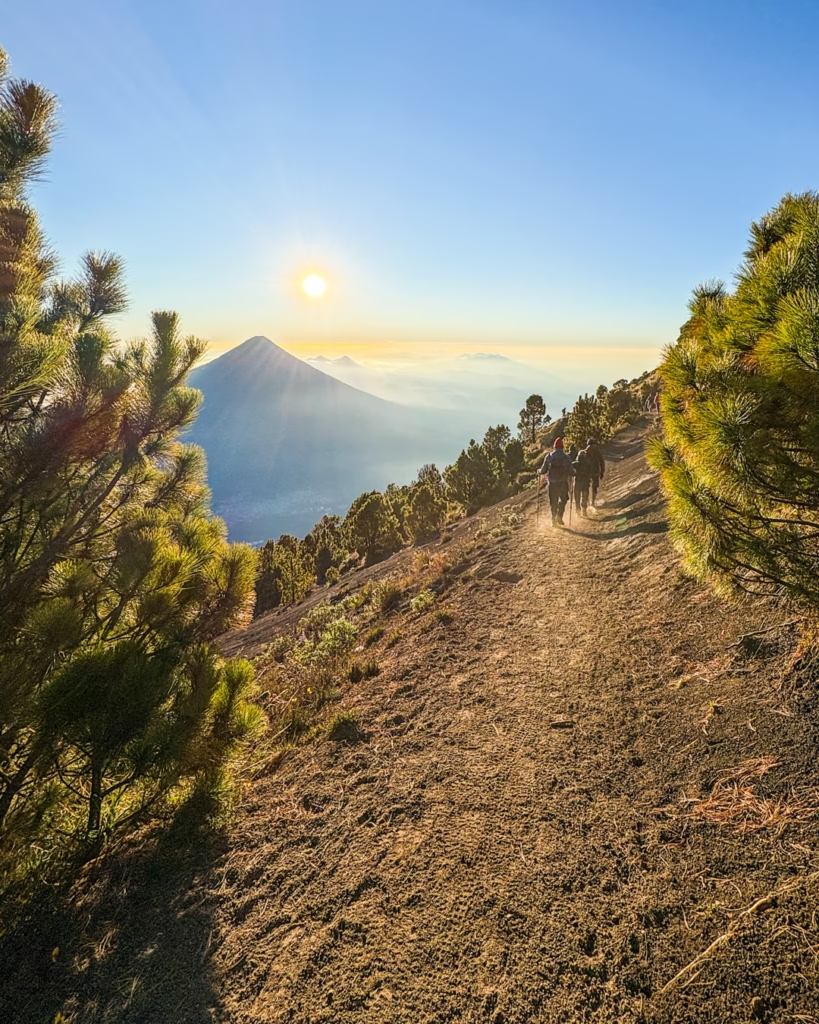
The trail isn’t technical, but it’s relentless. A steady incline that keeps going, winding through farmland, forest, and eventually the volcanic slopes high above the cloud line.
The guides set a manageable pace with regular breaks, but the higher you climb the more the altitude begins to make itself known.
As we gained height, the trail disappeared into thick cloud, and I started to wonder whether we would even see Volcán de Fuego — the active volcano that makes this trek so famous.
Reaching base camp already felt like an achievement. Tired legs, thin air, and the strange quiet that comes from being so high in the mountains.
If you’re still deciding whether the hike is right for you, I’ve written a full breakdown of how difficult the Acatenango hike really is and whether it’s actually worth doing.

But the real moment came later that evening.
We hiked across the ridge toward Fuego, clouds drifting around us and the wind cutting through every layer. For a while it felt like the volcano might remain hidden.
Then the sky cleared.
The ground shook beneath us. An explosion cracked through the air like thunder. Molten red magma shot high into the night sky before tumbling down the side of the volcano just metres away.
It’s one of the most surreal things I’ve ever experienced — standing on a mountainside watching the earth erupt in front of you.

Back at camp, dinner was served while eruptions continued through the night. Every twenty minutes or so the sky would glow again, followed by another deep rumble echoing across the valley.
Sleep came in short bursts between explosions, each one pulling you back out of your sleeping bag to watch.
By morning, you descend tired, dusty, and sore.
But you’ve watched an active volcano erupt from the mountainside — something very few places in the world allow you to experience this closely.
For me, it was the most unforgettable moment in Guatemala.
If you’re thinking about hiking Acatenango yourself, I’ve put together a full guide covering the route, difficulty, altitude, costs, packing list, and how to choose the right tour company.
You can also read my detailed breakdowns of the total Acatenango hike distance and the elevation gain you’ll tackle on the climb if you’re trying to work out whether it’s within your comfort zone.
What to Do in Antigua After Hiking Acatenango
By the time you return from Acatenango, Antigua feels very different.
Before the hike, the city is where you recover — easing into Guatemala after long flights or overnight buses, wandering quiet streets and slowly adjusting to the altitude.
After the hike, it becomes the reward.
You arrive back dusty, sore and running on very little sleep. Legs ache from the descent, your backpack still smells faintly of volcanic ash, and all you really want is a shower and somewhere comfortable to sit down.
Luckily, Antigua is very good at exactly that.
The same cafés that felt relaxed before the trek now feel earned. Cold drinks taste better. Coffee hits harder. Sitting down for a proper meal without a backpack on your shoulders suddenly feels like the best idea in the world.
You sit outside with friends, half-laughing at how wrecked everyone feels, watching people wander past along the cobbled streets.
But now the people-watching comes with a new game: have they done the hike yet, or are they about to?
Dusty boots, stiff legs, slightly hollow expressions — oh, they’ve definitely just come down from Acatenango.
And when evening arrives, how you celebrate is entirely up to you.
Some travellers keep it simple — a quiet drink on a rooftop terrace at Antigua Brewing Company, watching the sun set behind Volcán de Agua.
Others drift into Antigua’s nightlife — dancing with locals at El Barrio or joining the famous Antigua Bar Crawl.
We thought we were choosing the first option.
The plan was simple: one drink on a rooftop terrace after the hike.
But after two days on the mountain — running mostly on adrenaline and very little sleep — the feeling of being back in town with the group we’d climbed with carried us away.
One drink turned into another.
And somehow we ended up dancing in El Barrio instead.
Not the most sensible decision after climbing a 4,000-metre volcano.
But in that moment — tired, dusty, still buzzing from the experience — it felt like exactly the right way to end it.
Because after everything the mountain throws at you, Antigua is the kind of place where celebrating feels easy.
What Antigua Is Actually Like for Most Backpackers
Before visiting, I expected Antigua to be somewhere I’d spend my days rushing between attractions. In reality, my experience looked very different. I arrived exhausted after travelling from Semuc Champey, spent a couple of days wandering the city, drinking coffee, preparing for Acatenango, then recovering from Acatenango afterwards. Looking back, that seems to be how many backpackers experience Antigua. The city naturally slows you down. You wake up later than planned, spend longer in cafés than intended, and somehow lose entire afternoons wandering cobbled streets beneath the volcanoes. Only after leaving did I realise just how much more there is to do. Coffee farm tours, ATV tours, Hobbitenango, Pacaya Volcano, and nearby villages can easily add several extra days to a stay. If you’re moving quickly through Guatemala, Antigua works perfectly as a place to rest and prepare for Acatenango. But if you have more time available, it’s one of the easiest places in the country to slow down and stay longer than expected.Best Things to Do in Antigua Guatemala (Beyond Acatenango)
Wander the Colonial Streets and Photograph the Santa Catalina Arch
No image represents Antigua more than the bright yellow Santa Catalina Arch.
Built in the 17th century to connect a convent across the street, the arch now frames one of the most iconic views in Guatemala — with Volcán de Agua rising dramatically behind it on clear days.
Early morning is the best time to visit if you want photos without crowds. But even in the middle of the day, it’s one of those places travellers naturally drift back to while wandering the city.
Explore Antigua’s Historic Churches and Ruins
Antigua’s colonial past is everywhere you look.
The city was once the capital of Guatemala until devastating earthquakes in the 18th century left many buildings partially destroyed.
Instead of rebuilding everything, many of these structures were preserved — creating the atmospheric ruins that now define the city.
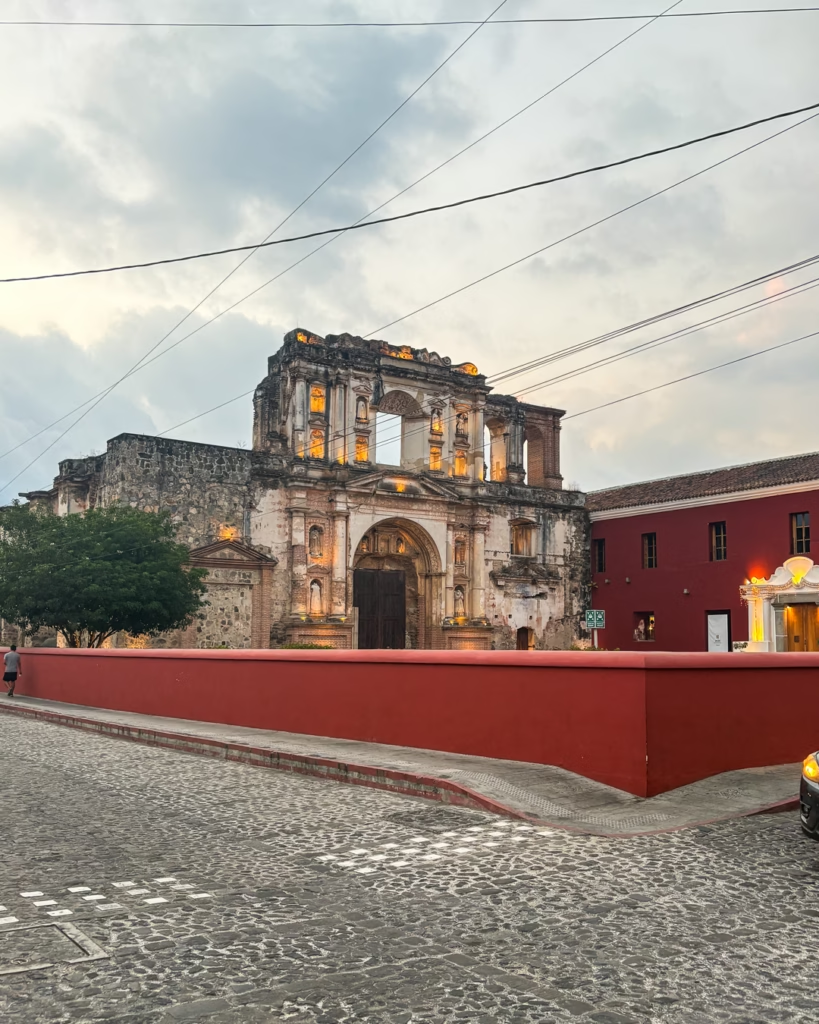
Places like Antigua Guatemala Cathedral and Convento de Santa Clara are among the most impressive.
Spend a Morning Café-Hopping
Antigua has become one of Guatemala’s café capitals, and it’s surprisingly easy to spend an entire morning moving between coffee shops, courtyards, and rooftop terraces. Café Boheme was my personal favourite. The rooftop terrace offered fantastic views over the city, while the smoothie bowls and coffee made it an easy place to linger far longer than planned. Coffee culture is deeply woven into Antigua’s identity, and many travellers end up spending as much time exploring cafés as they do visiting historical sites. Even if you’re not working remotely, Antigua’s cafés are part of the experience.Take a Coffee Tour on the Slopes of the Volcanoes
By the time you reach Antigua, you’ve probably already drunk a lot of Guatemalan coffee. It’s everywhere — served in hostels, cafés, and breakfast spots across the country. Antigua is one of the best places to actually see where it comes from. The volcanic soil and high elevation surrounding the city create ideal conditions for growing coffee, and nearby farms offer tours where you can walk through plantations and learn how beans move from plant to cup. Coffee from the volcanic highlands is one of the country’s most famous exports, and you’ll encounter it throughout any Guatemala travel itinerary.Visit Antigua’s Famous Starbucks and McDonald’s
It sounds ridiculous, but two of Antigua’s most photographed attractions are actually a Starbucks and a McDonald’s.
Both occupy beautiful colonial-style buildings with attractive courtyards and architecture that blend surprisingly well into the city.
Many visitors make a point of visiting them specifically because they look so different from the versions found elsewhere around the world.
Personally, I never fully understood the hype.
The buildings are certainly attractive, but once you’re inside they’re still Starbucks and McDonald’s. If you’re already walking past they’re worth a quick look, but I wouldn’t build part of my itinerary around them.
Enjoy Antigua’s Restaurant Scene
Antigua has one of the strongest food scenes in Guatemala, with everything from traditional Guatemalan restaurants to international cuisine.
My favourite meal in the city came from Casa Verona, a small Italian restaurant that felt like a welcome change after weeks of travelling.
While you’ll find plenty of local food throughout Antigua, the city has also become a popular base for international travellers, which means the restaurant options are noticeably more varied than many other destinations in Guatemala.
Take Spanish Lessons
Antigua is one of the most popular places in Latin America to learn Spanish.
Dozens of schools offer flexible programmes ranging from a few daily lessons to full immersion experiences where you stay with a local host family.
Many travellers arrive planning to stay a week — and end up staying much longer.
If you’re considering studying Spanish in Guatemala, Antigua and Lake Atitlán are generally considered the two most popular bases.
Hike Up to Cerro de la Cruz
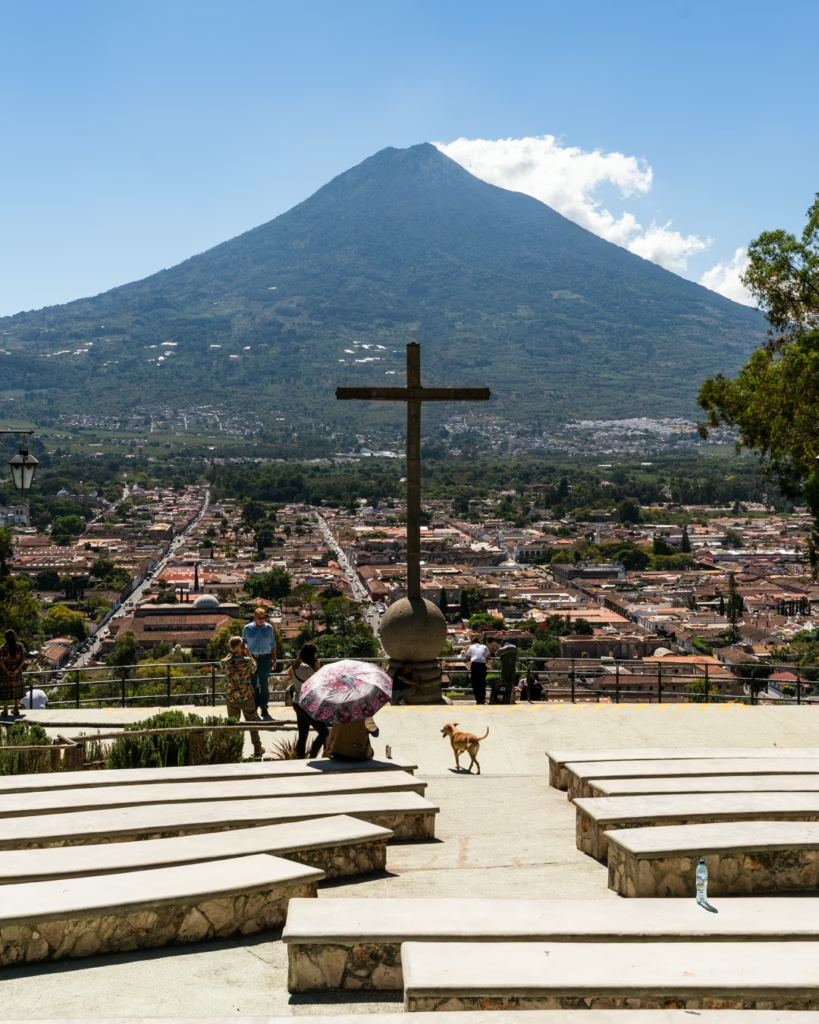
For one of the best views over the city, take the short walk to Cerro de la Cruz.
From the viewpoint, Antigua’s colourful grid stretches below you while Volcán de Agua towers dramatically in the background.
The walk itself is short and manageable, making it one of the easiest viewpoints to visit during your stay.
Enjoy Antigua’s Rooftop Terraces
Antigua’s rooftop terraces are some of the best places in town to watch the light change over the volcanoes.
Bars and restaurants across the city open their rooftops in the late afternoon, offering panoramic views as the sun sets behind the surrounding mountains.
Even if you’re not planning a full night out, stopping for a drink at sunset is one of the simplest pleasures in the city.
The best part is that there isn’t really one standout rooftop. They’re everywhere. Part of the fun is simply picking one, ordering a drink, and enjoying the view.
Work From Cafés (Or Catch Up on Travel Life)
Antigua has quietly become one of the best places in Central America for slow travel and remote work.
Reliable Wi-Fi, great coffee, and beautiful cafés make it easy to spend a few hours on a laptop before heading out to explore.
Even if you’re not working remotely, this is where travel admin finally gets done — posting photos, calling family you should have checked in with days ago, or opening your banking app to see whether your budget is still vaguely intact.
It’s the kind of place where a “quick coffee stop” quietly turns into an hour or two without you really noticing.
How Many Days to Spend in Antigua Guatemala
Two important things to keep in mind:
- Spend 1–2 days at altitude before climbing Acatenango. This can be done either in Lake Atitlán or Antigua.
- You don’t want to be jumping into a shuttle straight after coming down from Acatenango. Dusty. Tired. Hungry.
A good rule of thumb:
2 nights — Enough time to complete the Acatenango hike, but little else.
4 nights — A balanced stay with time to explore the city, hike Acatenango, and recover afterwards.
5+ nights — Ideal if you’re arriving from sea level or want to experience Antigua at a slower pace.
Antigua can absolutely be done quickly.
But it’s noticeably better when it isn’t.
If you’re planning a wider trip through the country, this city often fits naturally into a broader Guatemala itinerary, sitting between Lake Atitlán, Semuc Champey, and Flores.
If you’re working with a shorter trip, here’s exactly how to fit Antigua into a 2 week Guatemala itinerary without rushing your time here.
For most travellers, four nights is the sweet spot. It gives you enough time to acclimatise, hike Acatenango, recover properly afterwards, and still enjoy Antigua itself rather than treating it purely as a launch pad for the volcano.

Where to Stay in Antigua Guatemala
There are dozens of hostels and hotels in Antigua Guatemala, but the single best piece of advice is simple: stay close to Central Park.
Central Park sits right in the heart of the city. From here, cafés, restaurants, Spanish schools, tour offices and the main landmarks are all within a few minutes’ walk.
Antigua is extremely walkable, but basing yourself centrally means you can dip in and out of town throughout the day without needing to think about transport or long walks back at night.
Morning coffee runs, sunset walks, and last-minute dinner plans all become easier when you’re nearby.
If you’re still deciding where to stay throughout the rest of the country, my guide to where to stay in Guatemala breaks down the best areas and destinations for different travel styles.
There are dozens of good accommodation options in Antigua, but two hostels in particular stood out during my trip.

Adra Hostel — Comfortable but Quieter
Adra Hostel is one of the most popular hostels in Antigua, and after staying there myself it’s easy to see why.
The beds are genuinely excellent — some of the most comfortable I had during my entire trip through Guatemala.
After the long days that Antigua often involves (especially if you’re preparing for or recovering from the Acatenango hike), that level of comfort makes a noticeable difference.
The hostel itself feels polished and well designed, with good facilities and a calm atmosphere.
What it isn’t, however, is especially social.
If you’re hoping to meet lots of people or join group activities directly through the hostel, the vibe here is relatively relaxed and independent.
That makes Adra ideal if you want a comfortable base in a great location, but it can feel slightly expensive compared with more social hostels in town.
Tropicana Hostel — Social and Volcano-Focused
Tropicana Hostel sits at the opposite end of the hostel spectrum.
It’s one of the most social hostels in Antigua and a very common base for travellers hiking Acatenango.
The atmosphere is lively, the prices are budget-friendly, and the hostel runs its own Acatenango tours — which are already among the cheaper options in town.
If you stay at Tropicana, you’ll usually get a discount on their hike, making it an even better value.
One of the underrated benefits is the continuity it creates around the hike itself.
The people you meet at the hostel are often the same group you’ll head up the volcano with — and then come back down with the next day.
That shared experience naturally makes the social side of the hostel feel stronger.
The downside is that this popularity means you often need to book well in advance, especially during peak travel months.
The Takeaway
If you want comfort, good sleep and a calmer base, Adra is an excellent choice.
If you want a social atmosphere and a built-in Acatenango community, Tropicana tends to be the better option.
Whichever you choose, the real priority is staying within easy walking distance of Central Park.
Antigua is a city best experienced on foot, and being central makes everything about your stay simpler.
If you’re looking for the best accommodation options throughout the rest of the country, check out my guide to the best hostels in Guatemala, where I break down my top picks.
FAQ: Visiting Antigua Guatemala
Is Antigua Guatemala worth visiting?
Yes. Antigua combines colonial architecture, volcano views, excellent cafés, and easy access to Acatenango, making it one of the most well-rounded destinations in Guatemala.
How many days should I spend in Antigua?
Four nights is ideal for most travellers. This gives you time to explore the city, hike Acatenango, and recover afterwards.
Can you visit Antigua without hiking Acatenango?
Absolutely. Many travellers never hike Acatenango and still enjoy Antigua for its cafés, architecture, Spanish schools, markets, and surrounding volcano views.
Is Antigua expensive?
By Guatemalan standards, Antigua is one of the more expensive destinations in the country. Accommodation, restaurants, and tours generally cost more than elsewhere in Guatemala.
Is Antigua safe?
Antigua is generally considered one of the safest destinations in Guatemala for travellers. As with any tourist destination, normal precautions should still be taken, particularly at night.
If safety is one of your biggest concerns, you can also read my full guide on whether Guatemala is safe to visit.
Final Thoughts on Visiting Antigua
Antigua is often treated as a stopover.
A place to organise the Acatenango hike, spend a night or two, and then move on to the lake, the jungle, or somewhere further along a Guatemala itinerary.
But that approach tends to miss what makes the city so good.
Yes, Acatenango is the headline experience. Watching eruptions from neighbouring Volcán de Fuego is one of the most memorable things you can do anywhere in Central America.
But Antigua itself deserves more time than simply being the launch point for that adventure.
It’s a place where travel days slow down naturally.
Mornings begin with coffee and volcano views. Afternoons stretch out in cafés or Spanish classes. Evenings mean wandering cobbled streets that somehow feel both lively and relaxed at the same time.
Antigua works best when it isn’t rushed.
Give it time to acclimatise, hike, recover, and actually enjoy the city itself — and it becomes more than just a stop on the map.
It becomes one of the places people remember most from their time in Guatemala.
Where to look next
If you’re planning the rest of your trip through Guatemala, these guides will help you structure your route and decide what to prioritise:
Guatemala Itinerary
Plan your full route through Guatemala with 7, 10, and 14 day itinerary options, including how to prioritise destinations and avoid common mistakes.
Acatenango Hike Guide
Everything you need to know about hiking Acatenango — difficulty, altitude, costs, packing list, and choosing the right tour.
Guatemala Travel Budget
A realistic breakdown of what it costs to travel Guatemala — daily budgets, transport, tours, and where your money actually goes.