Planning a trip to Guatemala usually means looking at the same core route—Antigua, Lake Atitlán, Acatenango, Flores & Tikal, Semuc Champey, and El Paredón. And honestly, that’s not a bad thing. Guatemala isn’t an overly saturated tourist trail like parts of Southeast Asia. It’s established enough that travelling here is relatively easy, but still feels like you’re discovering places rather than simply ticking them off a list. After spending a month travelling through the country, it ended up becoming one of my favourite destinations I’ve ever visited. Not because of one standout attraction. Not because of one perfect destination. But because almost everywhere I went delivered. Flores gave me ancient Mayan ruins emerging from the jungle. Semuc Champey offered some of the most surreal natural scenery I’ve seen anywhere. Antigua became the perfect base for volcano hikes and café hopping. Lake Atitlán slowed everything down. El Paredón made me completely lose track of time. Almost every stop felt like it added something different to the trip. And that’s what makes Guatemala special. One of the biggest questions people ask before booking a trip is whether Guatemala actually feels safe and manageable to travel through. I’ve broken that down properly in my guide to whether Guatemala is safe to visit. If you’re trying to figure out how to structure your route, how much time you need, and which destinations deserve priority, I’ve put together a complete Guatemala itinerary guide. I’ve also broken down exactly what I spent in my guide to Guatemala travel costs, which can make a huge difference when deciding how long to stay in each destination.
Quick Facts
- Time spent: 1 month
- Route: Belize → Flores → Semuc Champey → Antigua → Acatenango → Lake Atitlán → El Paredón
- Best time to visit: Dry season (November–April)
- Trip style: Backpacking / Mid-range mix
- Favourite experience: Acatenango hike
- Biggest surprise: How every destination felt completely different
- Would I go back? Absolutely
Quick Guide to This Article
- My route through Guatemala
- What Guatemala is actually like (safety, costs, travel style)
- Why Guatemala stands out in Central America
- Best places to visit in Guatemala
- How long you need
- Where to stay in Guatemala
- Guatemala itinerary ideas
- Do you need Spanish?
- How to get around Guatemala
- Typical daily budget
- Common travel mistakes
- Food in Guatemala
- Travel FAQs
- Who Guatemala is for
- Is Guatemala worth visiting?
My Route Through Guatemala
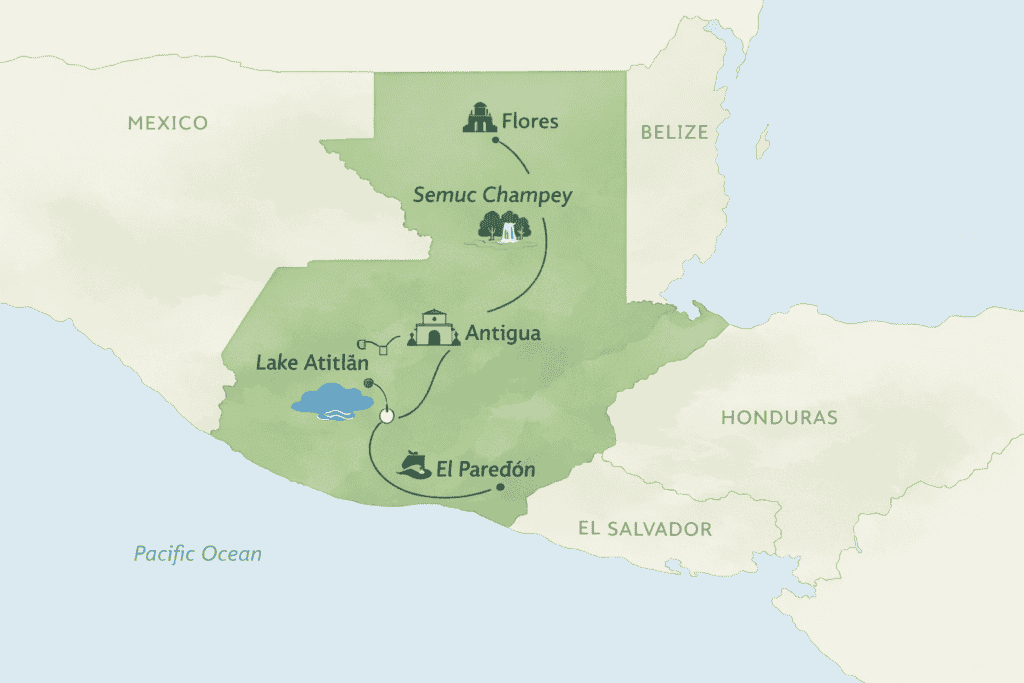
I entered Guatemala from Belize and followed what is probably the most logical route through the country:
Flores → Semuc Champey → Antigua → Acatenango → Lake Atitlán → El Paredón
It’s not necessarily the route because it’s popular. It’s popular because it works.
Each destination naturally flows into the next, and transport between them is relatively straightforward compared to much of Central America.
You still cross paths with other travellers following the same route, but it never felt overcrowded or over-touristed.
In fact, one of the things Guatemala does particularly well is balancing accessibility with adventure. The infrastructure is good enough that you rarely feel lost, but not so developed that destinations lose their character.
This route also follows the country’s most established tourist trail, which helps from a safety perspective. If you’re wondering what travelling this route actually feels like, here’s my complete guide to safety in Guatemala.
Guatemala at a Glance (The Reality)
Safety
Guatemala felt far more manageable than I expected.
Along the main backpacking route, you’re rarely isolated and there’s a constant flow of travellers moving between destinations.
One thing that surprised me was how many solo travellers I met. Several female travellers I spoke to actually said they felt safer here than in Belize, Nicaragua, or El Salvador.
That doesn’t mean Guatemala is risk-free.
While I was travelling, a state of emergency was declared in Guatemala City following serious prison unrest involving gangs. It’s a reminder that the country does have underlying issues and challenges.
However, this felt completely disconnected from the tourist route and had no impact on my experience.
The one area where I’d avoid unnecessary risks is transport to and from Guatemala City Airport. Organised transfers, hostel shuttles, or private transport are generally worth the extra cost.
If you want the full breakdown, including where I felt comfortable and where I’d be more cautious, read my guide on whether Guatemala is safe to visit.
Cost (The Sneaky Budget Killer)
Guatemala sits in an awkward middle ground when it comes to travel costs.
It’s cheap enough that you stop thinking about money.
But expensive enough that the spending quietly adds up.
You find yourself saying yes to another shuttle, another meal out, another hostel activity, another tour—and suddenly your budget isn’t looking quite as healthy as it did a week earlier.
Compared to Costa Rica, Guatemala feels significantly cheaper.
Compared to El Salvador and Nicaragua, it’s noticeably more expensive than many travellers expect.
And despite what some people assume, it’s not Southeast Asia-level cheap either.
For a full breakdown of accommodation, transport, food, and activity costs, check out my guide to travelling Guatemala on a budget.
Travel Style & Crowd
The travel scene here feels more balanced than in a lot of destinations that become backpacker hotspots.
You still get plenty of backpackers, but you’ll also meet couples, digital nomads, long-term travellers, Spanish students, and people slowly making their way through Central America.
There’s generally less emphasis on partying and more emphasis on actually experiencing each destination.
The result is a travel atmosphere that feels social without feeling chaotic.
Why Guatemala Stands Out Compared To Other Central American Countries
One of the reasons Guatemala became one of my favourite countries wasn’t because it had a single attraction that completely outshone everywhere else in Central America.
It was because every destination felt like it had a purpose.
Flores gives you Tikal. Semuc Champey delivers one of the most famous natural landmarks in the region. Antigua combines history, coffee culture, and volcanoes. Lake Atitlán attracts travellers from all over the world for its scenery and Spanish schools. El Paredón offers surf, sunsets, and some of the best backpacker vibes in the country.
Every stop feels different, but they all fit together into a route that simply works.
Compared to Belize, Guatemala feels far more culturally immersive. Belize has a stronger Caribbean and American influence, whereas Guatemala feels like a true introduction to Central American culture.
Compared to El Salvador, Guatemala feels more established as a backpacking destination. The traveller infrastructure is stronger, the hostel scene is bigger, and moving between destinations is generally easier. El Salvador feels like it’s heading in that direction, but Guatemala currently feels more polished from a backpacker’s perspective.
Compared to Costa Rica, the difference is even more obvious. Costa Rica is exceptionally good for holidays and resort-style travel, but Guatemala feels built for backpackers. It’s significantly cheaper, hostels are generally better, and travelling around the country feels more social and accessible.
What stood out most to me was the consistency.
There wasn’t a single destination on my route that felt like filler.
Every stop added something different to the overall experience.
That’s ultimately why Guatemala is usually the first country I’d recommend to someone looking for a backpacking trip in Central America.
Best Places to Visit in Guatemala (Honest Breakdown)
One of Guatemala’s biggest strengths is how different each destination feels.
In some countries, attractions can start to blur together after a few weeks. Guatemala never really had that problem.
One stop is all volcanoes and colonial streets. The next is jungle-covered Mayan ruins. Then you’re sitting beside one of the most beautiful lakes in the world before eventually ending up on a black-sand surf beach.
Every destination felt like it brought something unique to the trip.
Antigua
Just an hour from Guatemala City, Antigua is where most trips through the country begin—but it never felt like a throwaway starting point.
The city sits in a valley surrounded by volcanoes—Agua, Acatenango, and the constantly erupting Fuego—visible from the streets as you wander between colourful buildings, hidden courtyards, and centuries-old ruins.
At first, it almost feels too picturesque.
But what makes Antigua stand out isn’t just how it looks.
It’s the role it plays in your trip.
Preparation.
Recovery.
Reward.
Before Acatenango, it’s where you ease in—good coffee, slow mornings, and wandering without much direction.
After the hike, everything changes.
Dust-covered boots under café tables. Rooftop drinks overlooking the same volcano you stood beside the night before. Conversations that somehow start with hiking and end three hours later.
It’s a place that works on both sides of the experience—and the more time you give it, the more it grows on you.
If you’re planning your trip, I’ve broken down everything I learned in my complete Antigua travel guide, including where to stay, what to do, and how to plan around Acatenango.

Acatenango Hike
If there’s one experience that defines Guatemala, it’s Acatenango.
You spend the day climbing—hot, dusty, and steadily more difficult than expected—until eventually reaching camp high on the side of the volcano.
And then night falls.
Across the valley, Volcán Fuego erupts.
Again.
And again.
And again.
Lava lights up the darkness while the sound rolls across the mountains long after each explosion.
It doesn’t feel real the first time it happens.
Or the second.
Or the fifth.
It’s one of the few travel experiences I’ve had that genuinely exceeded expectations.
But it’s also harder than many people expect.
Cold. Steep. Exhausting.
If you’re wondering exactly what you’re signing up for, I’ve broken down how hard the Acatenango hike really is, including my honest opinion on whether it’s worth it.
If you’re preparing for the hike, I’ve also covered the full Acatenango hiking distance and the surprisingly brutal Acatenango elevation gain, which is what catches most people out.
It’s also the experience that ends up shaping the rest of your Guatemala itinerary, which is why I built my recommended routes around it in this Guatemala itinerary guide.
For the full experience—including tours, costs, and what it’s actually like spending the night beside an erupting volcano—read my complete Acatenango guide.

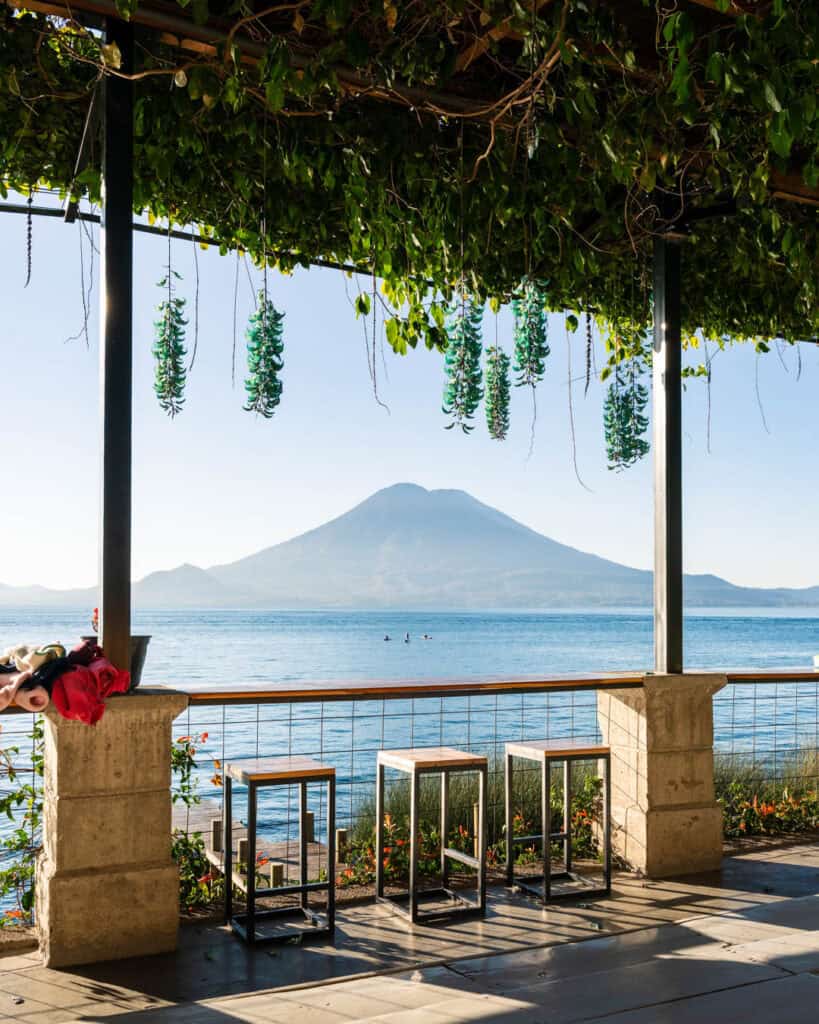
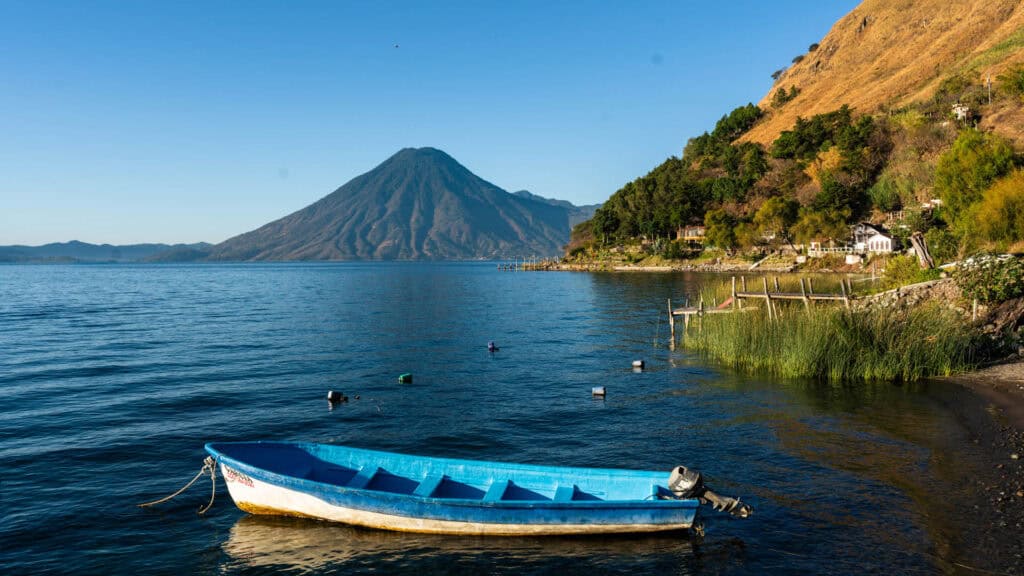
Lake Atitlán
Lake Atitlán is where your trip slows down—whether you intend it to or not.
You arrive expecting to stay a few days.
Then suddenly a week has passed.
Each town around the lake feels completely different, and where you stay has a huge impact on your experience.
Some places are social backpacker hubs.
Others are quieter, more local, and better suited to slowing down.
If you’re struggling to decide where to base yourself, I’ve broken down the best towns in my guide to where to stay in Lake Atitlán.
Mornings stretch out longer here.
Boats move slowly between towns.
The light changes constantly across the water.
Days stop feeling structured.
It’s also one of the biggest Spanish-learning hubs in Central America, and plenty of travellers end up staying weeks longer than originally planned because of it.
For me, Atitlán wasn’t somewhere to rush through.
It was somewhere to settle into.
I’ve covered the different towns, accommodation options, and how long I’d actually recommend staying in my complete Lake Atitlán travel guide.
If you’re backpacking, I’ve also put together my guide to the best hostels in Lake Atitlán.
Semuc Champey
Semuc Champey is one of those places you’ve probably seen before you’ve even started planning your trip.
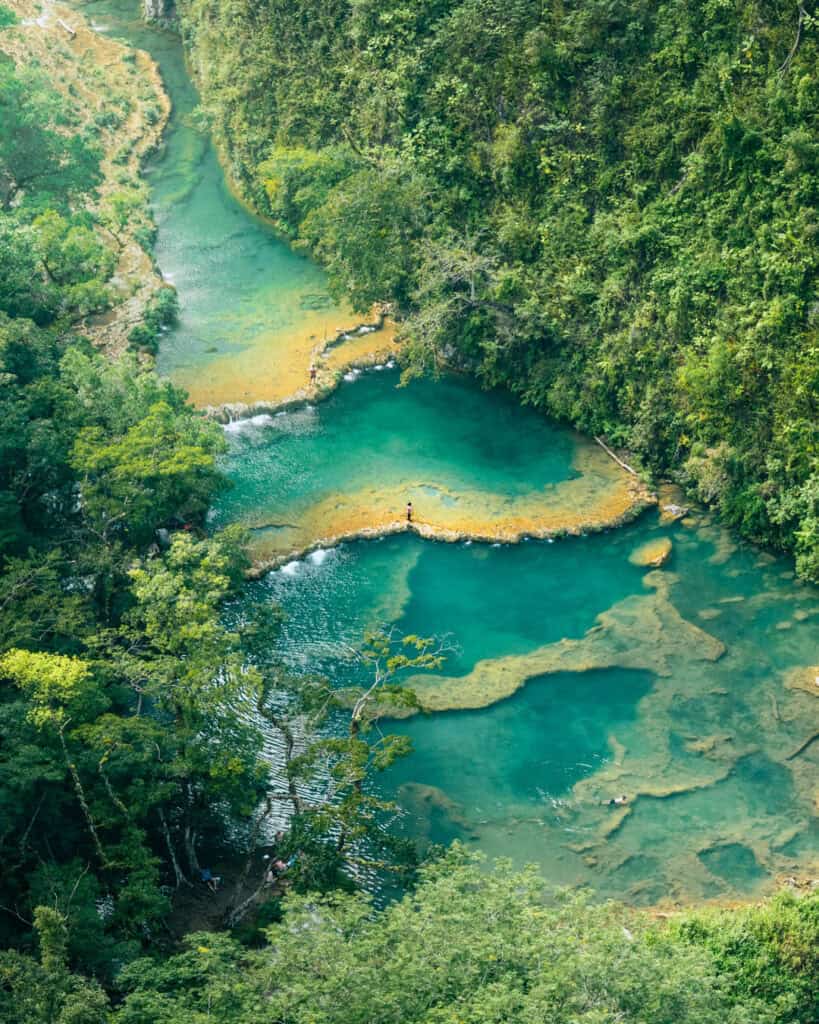
Bright turquoise pools surrounded by dense jungle have become one of Guatemala’s most recognisable images.
And in person?
It genuinely looks like that.
Standing at the viewpoint looking down over the pools, it’s easy to understand why it’s become one of the country’s most famous destinations.
But Semuc Champey is also one of the few places in Guatemala where it’s worth asking whether it actually fits your itinerary.
Getting there is more complicated than the rest of the backpacker route. Travel days are longer, transport is slower, and it requires more commitment than destinations like Antigua or Lake Atitlán.
For some travellers, that’s part of the appeal.
For others, it’s the reason they skip it.
If you’re trying to decide whether it’s worth the extra travel time, I’ve written a dedicated guide on whether Semuc Champey is actually worth visiting.
I also cover transport, hostels, caves, tubing, and everything else you’ll need to know in my complete Semuc Champey guide.
Flores & Tikal
Flores is probably the destination I regret rushing through the most.
Most travellers arrive for one reason: Tikal.
And it’s easy to treat Flores as little more than a place to sleep before visiting the ruins.
That’s exactly what I did.
Looking back, it’s one of the few decisions I’d change.
Even one or two extra nights would have made a difference.
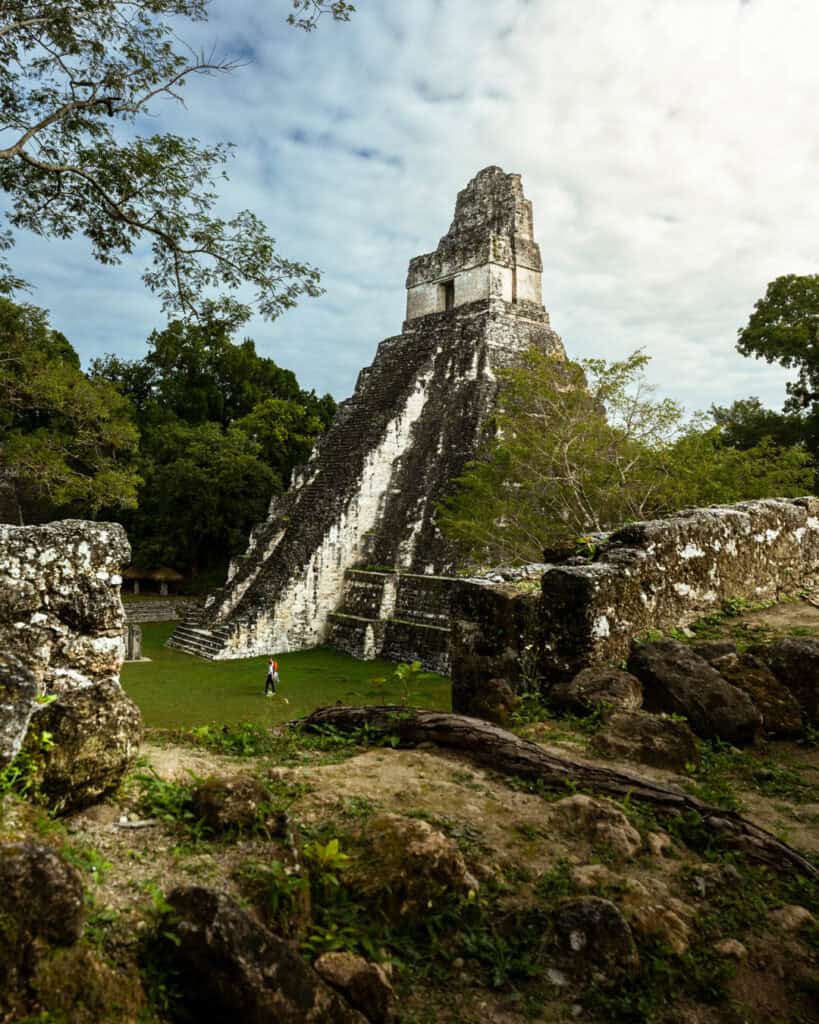
Flores itself is built on a small island in Lake Petén Itzá, with colourful buildings, narrow streets, and an atmosphere that’s noticeably more relaxed than many of Guatemala’s other destinations.
But Tikal is still what makes this stop special.
It doesn’t feel like a typical archaeological site.
It feels like you’ve stumbled across something that shouldn’t still exist.
Jungle paths connect enormous stone plazas while howler monkeys echo through the canopy overhead. Then suddenly the trees open up and another temple appears.
Larger than expected.
Older than you can properly comprehend.
And somehow still partially hidden beneath the jungle.
Climbing Temple IV and looking out across the rainforest remains one of the most impressive views I experienced anywhere in Guatemala.
If I went back tomorrow, Flores is the destination I’d spend longer exploring.
I’ve covered how to visit Tikal, where to stay, and whether Flores deserves more than a quick stop in my complete Flores & Tikal guide.
El Paredón
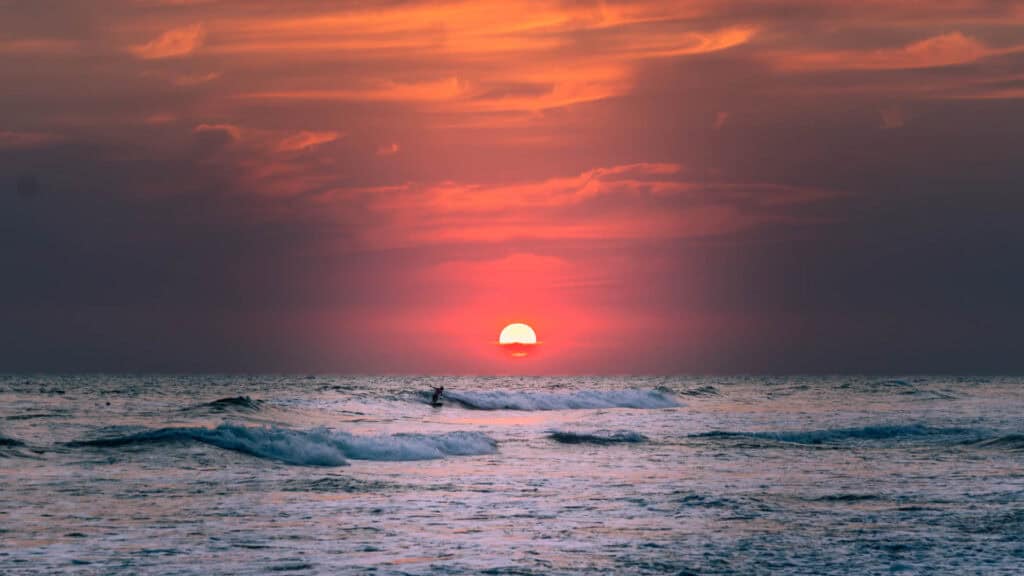
El Paredón isn’t somewhere you visit for major attractions.
It’s somewhere you visit for a rhythm.
Surf.
Eat.
Watch sunset.
Repeat.
And somehow that’s enough.
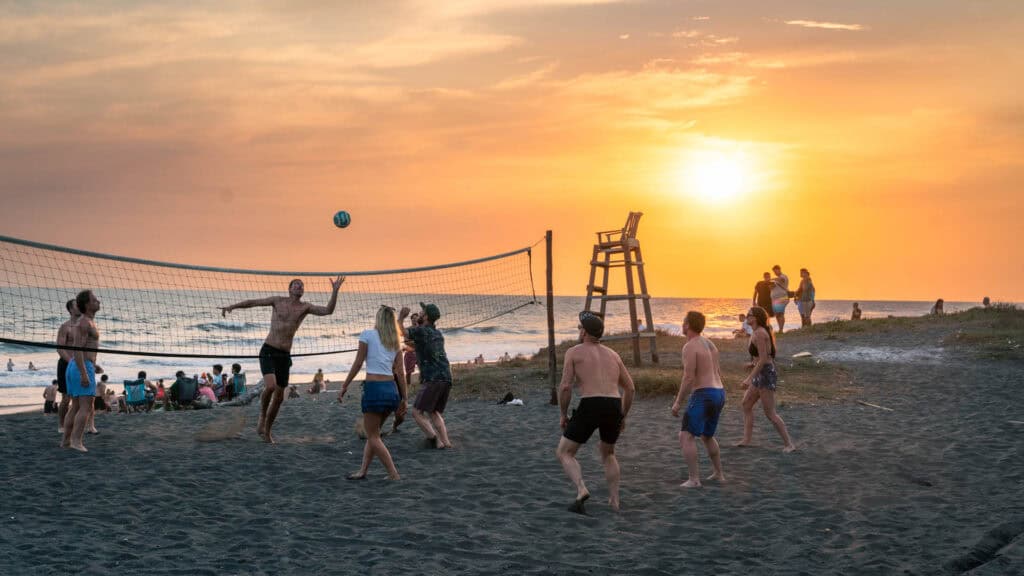
Days blur together quickly here. You stop checking the time, stop planning properly, and just fall into whatever the day becomes.
For me, this was one of the easiest places in Guatemala to stay longer than planned—and one of the hardest places to leave.
Second only to Acatenango as a trip highlight.
If you’re deciding whether it deserves a place in your itinerary, I’ve written a full guide on whether El Paredón is worth visiting after spending eight days there.
I’ve also covered accommodation, surf lessons, nightlife, and how long I’d actually recommend staying in my complete El Paredón travel guide.
If you’re still deciding where to stay throughout the country, I’ve broken everything down in my guides to where to stay in Guatemala and the best hostels in Guatemala, including my favourite places in Antigua, Lake Atitlán, Flores, and beyond.
How Long Do You Need in Guatemala?
The short answer?
More than you probably think.
Guatemala is one of those countries where people consistently underestimate how much time they’ll want.
Partly because destinations are more spread out than they appear on a map, and partly because places like Lake Atitlán and El Paredón have a habit of keeping travellers around longer than planned.
If you’re trying to rush through the highlights, two weeks is enough.
If you actually want time to enjoy them, three to four weeks is where Guatemala really shines.
- Minimum: 2 weeks
- Ideal: 3–4 weeks
- Best: 1 month+
You can absolutely see the major highlights in two weeks.
But you’ll miss a lot of what makes Guatemala special: slow mornings in Antigua, extra days around Atitlán, spontaneous hostel recommendations, and those unexpected moments that end up becoming trip highlights.
If you’re working with a specific timeframe, I’ve broken down exactly how I’d structure a trip in my Guatemala itinerary guide.
Where To Stay In Guatemala
One of the reasons Guatemala works so well as a backpacking destination is that every stop serves a different purpose.
Rather than trying to squeeze everything into one place, it’s usually better to move between destinations and experience what each does best.
| Destination | Recommended Stay | Why Stay Here? |
|---|---|---|
| Antigua | 4–5 nights | Colonial city, cafés, volcano views, Acatenango base |
| Lake Atitlán | 4–10 nights | Relaxation, Spanish schools, lake life |
| El Paredón | 3–4 nights | Surfing, sunsets, beach atmosphere |
| Flores | 2–4 nights | Tikal and jungle experiences |
| Semuc Champey | 2–3 nights | Pools, caves and jungle adventures |
If you’re deciding where to base yourself, I’ve broken everything down in my guide to where to stay in Guatemala.
For accommodation recommendations, check out my guide to the best hostels in Guatemala.
If Lake Atitlán is on your route, I’ve also put together a detailed breakdown of where to stay in Lake Atitlán and my favourite hostels around the lake.
Guatemala Itinerary Ideas
One of the biggest mistakes people make is trying to fit too much into a short trip.
Guatemala looks small on a map, but travel days can take longer than expected and some destinations deserve far more time than they initially appear.
2-Week Guatemala Itinerary
If you only have two weeks, I’d focus on quality over quantity.
- Antigua (3 nights)
- Acatenango (1 night)
- Antigua (2 nights)
- Lake Atitlán (4 nights)
- El Paredón (3 nights)
This gives you Guatemala’s strongest combination of culture, scenery, adventure, and relaxation without constantly feeling like you’re in transit.
Personally, I wouldn’t try to squeeze Semuc Champey or Flores into a two-week trip unless visiting Tikal is a major priority.
The Ideal Guatemala Route (3–4 Weeks)
If Guatemala is the main destination rather than one stop on a longer Central America trip, this is the route I’d recommend.
- Antigua (2–3 nights)
- Acatenango (1 night)
- Antigua (2 nights)
- Semuc Champey (2–3 nights)
- Flores & Tikal (3–4 nights)
- Lake Atitlán (4–10 nights)
- El Paredón (3–4 nights)
This is essentially the route I followed, and it’s probably the best balance of logistics and experiences you’ll find in Guatemala.
If You’re Backpacking Through Central America
One of Guatemala’s strengths is how naturally it fits into a wider Central America trip.
If you’re travelling north from El Salvador or south from Belize and Mexico, the route works equally well in either direction.
And compared to some neighbouring countries, Guatemala’s tourist shuttle network makes travelling between destinations surprisingly easy.
I’ve covered route planning in much more detail in my complete Guatemala itinerary guide.
Do You Need To Speak Spanish In Guatemala?
No—but you’ll get much more out of the country if you do.
In Antigua, Lake Atitlán, Flores, and other major tourist destinations, it’s perfectly possible to travel with little or no Spanish.
Outside those areas, English drops off quickly.
Even basic Spanish makes everyday travel significantly easier, especially when dealing with transport, local restaurants, markets, or smaller towns.
It’s also one of the reasons so many travellers spend extended periods around Lake Atitlán. The region has become one of the most popular places in Central America to learn Spanish.
Even learning a handful of basic phrases before arriving will noticeably improve your experience.
How To Get Around Guatemala
For most travellers, tourist shuttles are easily the simplest option.
They’re affordable, relatively comfortable, and connect almost every destination on the main backpacking route.
You can usually book them through:
- Hostels
- Accommodation providers
- Bookaway
- Direct shuttle operators
I personally used a company called Itamati via WhatsApp throughout most of my trip. It made booking straightforward and allowed me to pay using Revolut rather than carrying large amounts of cash.
Chicken buses are significantly cheaper and can be part of the experience, but they require more flexibility, more local knowledge, and a bit more patience.
If your priority is convenience, tourist shuttles win comfortably.
I’ve broken down every transport option—including shuttle routes, costs, and what I’d realistically recommend—in my guide to getting around Guatemala.
Transport is also where many first-time visitors have safety concerns. If you’re unsure what to avoid and what is genuinely safe, I’ve covered that in my guide to travelling safely around Guatemala.
Typical Daily Budget In Guatemala
One of the reasons Guatemala has become such a popular backpacking destination is that it offers a lot of value without feeling ultra-budget.
You can travel cheaply if you want to, but it’s also very easy to justify spending a little more on better hostels, organised shuttles, volcano tours, and activities.
That’s exactly how Guatemala quietly becomes more expensive than expected.
| Travel Style | Budget | What You Get |
|---|---|---|
| Budget Backpacker | $25–40/day | Basic hostels, chicken buses, local food and DIY activities |
| Mid-Range Backpacker | $40–80/day | Good hostels, tourist shuttles, restaurants and organised tours |
| Higher Comfort | $80+/day | Private rooms, regular restaurants and minimal budget concerns |
For a full breakdown of exactly what I spent—including accommodation, food, transport and activities—read my guide to Guatemala travel costs.
Guatemala Travel Tips (And Mistakes To Avoid)
If I could go back and give myself advice before arriving in Guatemala, these are the things I’d pay most attention to.
Don’t Treat Lake Atitlán As A Quick Stop
Almost everyone I met underestimated how long they’d want at Lake Atitlán.
People arrive planning two or three nights and then end up extending for a week.
The different towns, slower pace of life, and social atmosphere make it one of the easiest places in Guatemala to stay longer than planned.
Don’t Underestimate Acatenango
The views are world-class.
The hike is also genuinely difficult.
A lot of people focus on the volcano eruptions and completely underestimate the physical challenge involved.
If you’re planning the hike, it’s worth understanding both the distance and elevation gain before booking.
Don’t Assume Guatemala Is As Cheap As Southeast Asia
Guatemala is affordable.
But it’s not Thailand-level cheap.
Hostels, organised transport, volcano tours, and activities add up surprisingly quickly.
Most travellers spend more than they initially expect.
Don’t Leave The Best Experiences Too Late
I normally advocate for flexibility while travelling.
But Guatemala has become popular enough that some of the best hostels, Acatenango operators, and Spanish schools regularly fill up.
Leaving everything until the last minute can sometimes mean missing out on your preferred options.
Don’t Rush Flores
Flores is probably the place I most regret rushing through.
I treated it primarily as a gateway to Tikal.
Looking back, I wish I’d spent a few extra nights there and stayed in one of the more social hostels.
Read These Before You Go

What I Thought Of The Food In Guatemala
Food wasn’t the reason I fell in love with Guatemala.
If someone asked me what stood out most from the trip, I’d mention volcanoes, lakes, jungle ruins, hostels, and landscapes long before I mentioned the food.
That’s not because the food is bad.
It’s just not what makes Guatemala special.
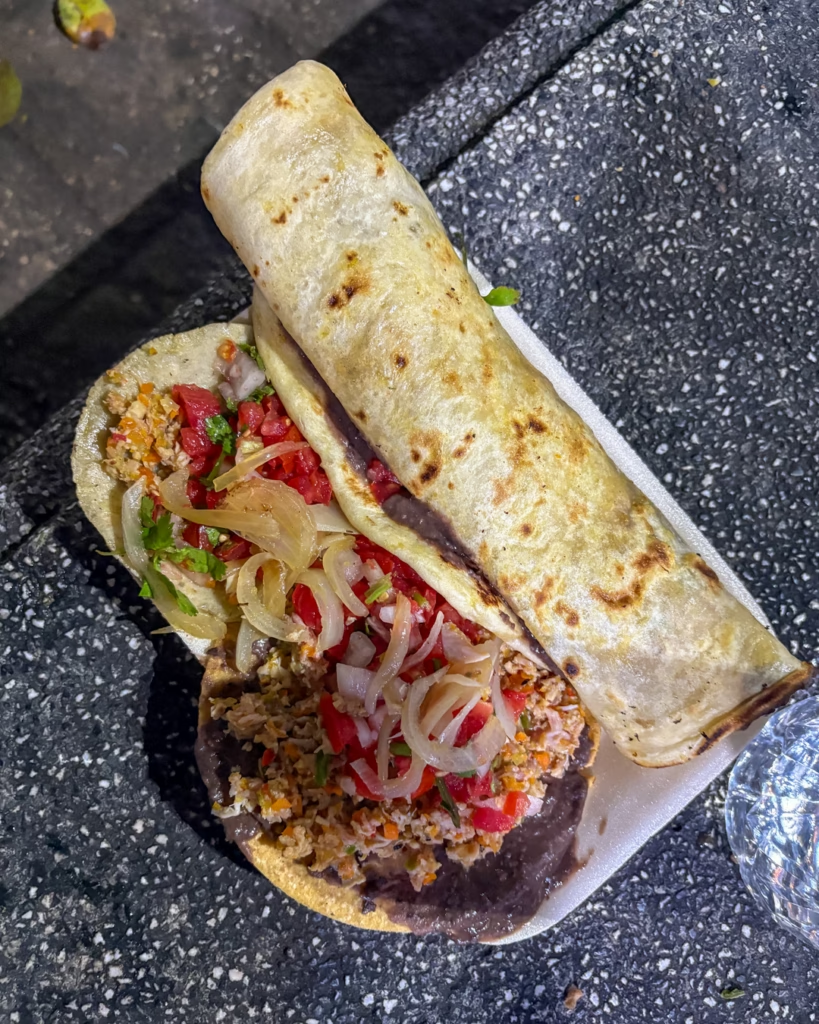
Most meals revolve around combinations of tortillas, grilled meat, beans, rice, eggs, plantains, and simple local ingredients.
The food is generally filling, affordable, and reliable rather than something you travel across the world specifically to experience.
Where Guatemala surprised me most was its café culture.
Antigua in particular has some genuinely excellent coffee shops, and the quality of Guatemalan coffee quickly became one of my favourite parts of travelling around the country.
One thing I regret not doing is taking a cooking class.
It’s something I tell myself I’ll do in almost every country and rarely actually book.
While Guatemala wasn’t a destination built around food for me, learning how to recreate some of the dishes at home would probably have been one of the most useful souvenirs I could have brought back.
Guatemala Travel FAQs
Do You Need A Visa For Guatemala?
For many travellers, Guatemala is visa-free for up to 90 days under the CA-4 agreement, which also includes El Salvador, Honduras, and Nicaragua.
The important thing to understand is that the 90-day allowance is shared across all four countries rather than being granted separately in each one.
If you’re backpacking through Central America, it’s worth keeping track of your time carefully.
Do You Need A SIM Card In Guatemala?
No, but it can definitely make life easier.
I travelled the entire country without one by relying on downloaded Google Maps, offline Google Translate, and hostel WiFi.
That worked perfectly well for me.
However, most travellers I met used local Tigo or Claro SIM cards and found them cheap, reliable, and easy to organise.
Are ATMs And Card Payments Easy To Use?
ATMs are easy to find, although fee-free withdrawals are rare.
Most machines charge somewhere between $3–6 per withdrawal.
Because of this, it often makes sense to withdraw larger amounts less frequently.
Cash is still king in many parts of Guatemala, particularly outside the most tourist-focused destinations.
Even where cards are accepted, additional transaction fees aren’t uncommon.
Is Guatemala Safe?
Yes—particularly along the established tourist route.
Most travellers spend the majority of their time in places like Antigua, Lake Atitlán, Flores, and El Paredón, where travelling feels relatively straightforward and well-established.
That doesn’t mean common sense stops applying, but Guatemala felt far safer and easier to navigate than many people expect before arriving.
If you want a detailed breakdown of what I experienced, where I’d be cautious, and what I’d avoid, read my guide on whether Guatemala is safe to visit.
Who Guatemala Is For (And Who It’s Not)
One of Guatemala’s biggest strengths is how many different types of travellers it works for.
Some countries feel heavily geared towards one style of trip.
Guatemala doesn’t.
It manages to combine adventure, culture, relaxation, history, language learning, and backpacking into a route that feels surprisingly balanced.
Guatemala Is Great For Backpackers
If you’re looking for your first backpacking trip in Central America, Guatemala is probably the country I’d recommend most often.
The route is well established, transport is straightforward, hostels are generally excellent, and there’s enough traveller infrastructure that you’re rarely left wondering what to do next.
At the same time, it still feels adventurous enough that the experience doesn’t become overly polished.
Guatemala Works Well For Solo Travellers
One thing I noticed throughout the country was how easy it was to meet people.
Hostels were social without being dominated by partying, and most destinations naturally encourage travellers to spend time together.
Whether that’s sharing shuttles, hiking volcanoes, taking Spanish classes, or simply spending an extra sunset at the lake.
If you’re travelling alone, Guatemala is one of the easier countries in the region to build connections quickly.
Guatemala Is Also Great For Couples
Not every destination needs to revolve around hostels and backpacking.
Antigua’s cafés and rooftop bars, Lake Atitlán’s boutique hotels, and El Paredón’s slower pace all work extremely well for couples looking to mix relaxation with adventure.
The country offers enough variety that it’s easy to create a trip that doesn’t feel repetitive.
Who Might Not Love Guatemala?
If your priority is luxury resorts, polished tourism infrastructure, or world-class nightlife, Guatemala may not be your perfect match.
Costa Rica generally caters better to higher-end holiday travel.
And if your ideal trip revolves around nightlife, there are destinations elsewhere in Latin America that do it better.
For me, Guatemala’s strength isn’t partying.
It’s the overall experience.
It’s a country where almost every destination gives you a different reason to be there.
Is Guatemala Worth Visiting?
Yes.
But not because it’s some hidden gem nobody knows about.
And not because every destination is perfect.
A lot of Guatemala’s most famous places are famous for a reason.
Acatenango really is that impressive.
Lake Atitlán really is that beautiful.
Tikal genuinely feels like stepping into another world.
And El Paredón really can make you lose track of an entire week without noticing.
What surprised me most wasn’t any individual destination.
It was how well the entire trip held together.
Flores felt different from Antigua.
Antigua felt different from Atitlán.
Atitlán felt different from El Paredón.
Yet somehow the route never felt disjointed.
Every destination added something unique.
Nothing felt like filler.
That’s ultimately why Guatemala became one of my favourite countries I’ve travelled through.
Not because it’s flawless.
Not because every day is extraordinary.
But because it consistently delivers.
If someone asked me for one backpacking destination in Central America, Guatemala would probably be the first country I’d recommend.
And if anything, the biggest problem with visiting Guatemala is that you’ll probably leave wishing you’d had more time.