
Flores
If you’re entering Guatemala from Belize, Flores is likely to be your first stop in the country, as it is pretty close to the border. Flores is a tiny town situated on an island in the middle of a lake, only linked to the mainland by one bridge. It is also accessible by boat from various towns around the outside of the lake.
When I say tiny, it is an island which you can walk the whole way around in just 15 minutes, and so for that reason, there isn’t a huge amount to do here. The main activity is to go to Tikal. Tikal is the largest set of ruins you will visit whilst travelling, with over 400 hectares of excavated city and a wider area of 1200 hectares yet to be fully uncovered. I did a 6-hour tour here and barely touched the surface of what Tikal has to offer. Our guide estimated that to truly see everything in the site, you would need 3 days inside. For this reason, if you are just coming for one day, it is highly recommended to get a guide, as they will show you the most efficient ways to get between all of the most impressive and most important structures.
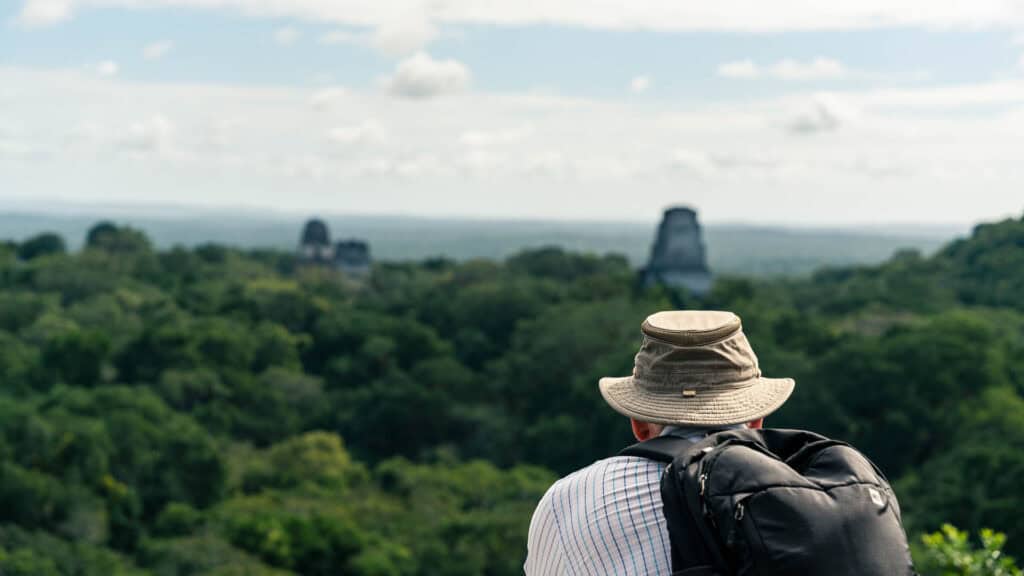
Of course, with a site as big as this, it goes without saying you are going to be walking a lot, and for the best views, you’ll be climbing a fair amount of stairs. The largest of the temples, Temple IV, stands at 70 meters tall.
One of the most fascinating things here is just how large the stairs of these pyramids and temples are. With some ascents as steep as 70 degrees, these buildings were meant to be climbed solely by the most elite of society. These priests and leaders had a far lower strain in life and were fed much better than others in society, and so they were often taller, and so their descent of these stairs was supposed to demonstrate this superiority or even be intimidating when necessary. Even with the advantage of being far taller than the Mayans, trying to walk down these stairs as you would back home is pretty challenging, and for those with a fear of heights, probably impossible.
While Tikal is designated a UNESCO World Heritage Site for culture, it is also designated as a site for its huge biodiversity. While walking around the park, you will see a huge number of species of birds and trees. The headline animals here, though, are monkeys, pumas and jaguars, which all live within the park. While we were here, we both saw and heard howler monkeys from just a few feet away up in the trees, and there have been sightings of the jaguars close to the ruins themselves; this is, of course, very rare though.

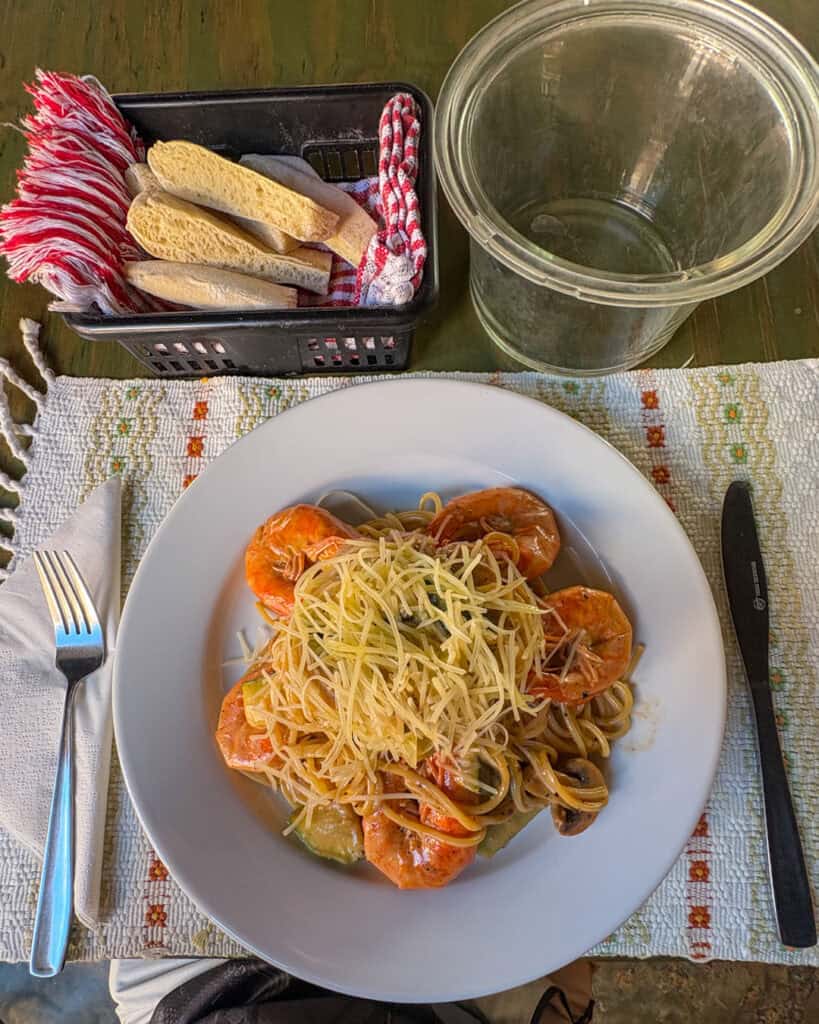
For food in Flores, you have to check out Bistro Puertas del Cielo. This is a restaurant run by a hugely passionate chef who prefers to work with no set menu. Instead he comes over to the table and speaks with you about your own preferences and what food he has fresh, and then goes away and creates a surprise dish for you. I ended up with a spicy shrimp spaghetti, which was right up there with the pasta in Florence and Rome for the best I have ever had. I even asked for extra bread on the side to wipe up every last bit of the sauce and leave the plate practically clean. This does come with a bit of a higher price tag, comparable but still cheaper than that of Europe, but it is worth every penny.
For local street food, there is Tacos Los Peces, a small taco stand in the main square which serves up delicious tacos, burritos and tostadas for literal pennies.
For a cocktail with a perfect view of the sunset, head up to the aptly named sky bar. Here, they have a happy hour over sunset, and their mojitos tick all the boxes.

I chose to stay just 2 nights here because before I came, I hadn’t seen a huge amount to do here, and because I already had my accommodation booked for my next destination, I couldn’t stay longer. However, if I could have, I think 3 nights here is perfect. The main reason for this is that the shuttles from Belize get into Flores quite late in the evening, and the shuttles leaving Flores leave early in the morning. This meant, despite it being 2 nights, I had barely more than 24 hours here.
With more time, there is Jorge’s rope swing and closeby the Mirador Ray Canes, which is great for sunset. Grab some friends and some beers, and this would have been a great way to spend an afternoon.
There is also a sunset boat party here hosted by Los Amigos hostel, which I have heard good things about. This runs every Saturday from 1 until 7 for just 150 quetzals and includes stops at gorges, rope swing and swim spots. They provide free rum punch for the first couple of hours, and I’ve heard this one gets pretty lively as a result.
Semuc Champey
If you’re heading to Semuc Champey, it is for one thing, which is, of course, the national park. The park itself is absolutely stunning and well worth spending the day here. How you do this depends on where you are staying, but they are largely the same. Each hostel runs a tour consisting of a bit of caving, a bit of river tubing and the national park itself. The main difference is that if you are at Greengos, the national park isn’t included in the tour, as the hostel is around the corner from the entrance, and so you can take yourself here practically whenever you would like. The other hostels are located in Lanquin, which is a 20/30 minute drive away and so the national park is part of the tour. You can still access Semuc Champey without a tour if you are staying in Lanquin you just have to grab a tuc tuc for the drive there and back which is usually 50 quetzals each way.

The caving that starts the tour is not your normal caving experience; in short, because it wouldn’t be allowed whatsoever in England. It feels like some sort of cult initiation. No head torches are used in this cave; only candles, with each person being given their candle to look after for the trip. At the entrance of the caves the guides use some candles to melt the rock of the cave onto their hands, they then procede to draw some kind of war paint design on your face. This is incredibly difficult to get off; I found heating it back up to be the easiest way, but some strong makeup remover also did the trick. You then walk in single file through these caves, with your candles, where you climb, jump, slide and swim through about a kilometre of cave before coming back out. Once outside the cave, there is the optional rope swing into the river, which the locals demonstrate with such elegance and then every tourist proceeds to do horrendously (my attempt shown) and almost without question becomes inured in one way, shape or form. I had a strain in my neck for weeks afterwards because of this.
After this is the tubing, which is pretty tame; the river runs slowly, and so you can chill out, chat and have a beer in the sun. There are even locals sitting along the side who will throw you more beer if you want, which, of course, you can then pay for once you are out.

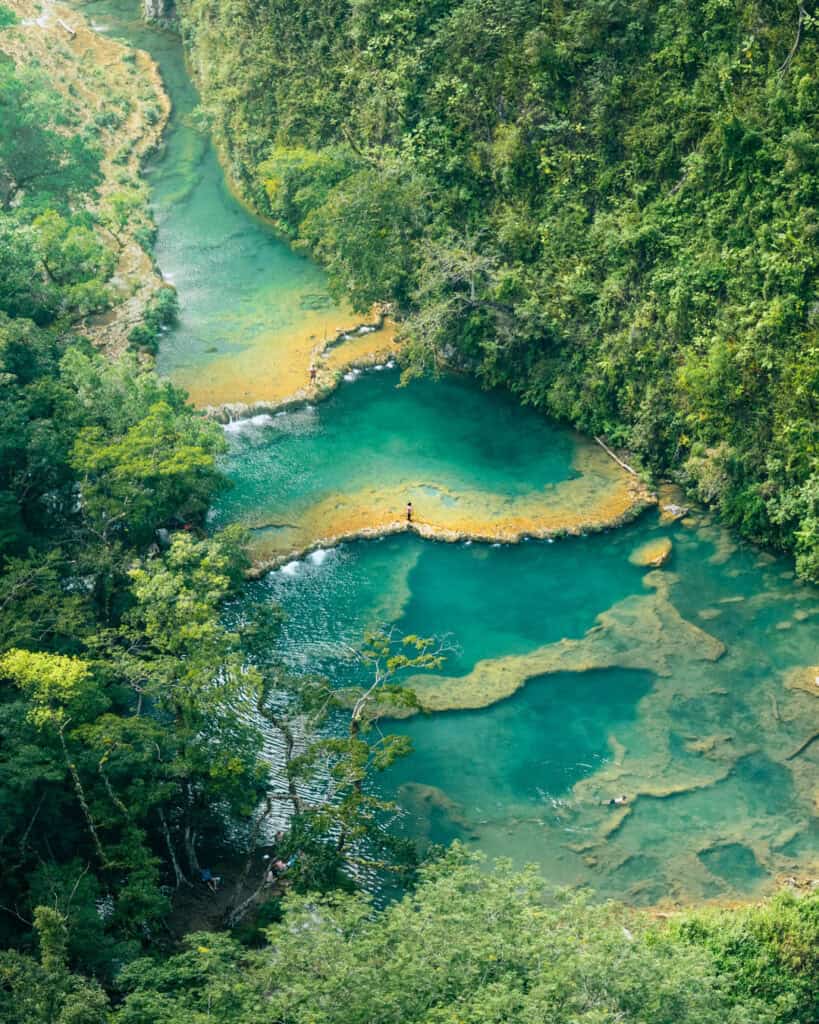
That is basically the only activity to do in Semuc Champey; the only other attraction is that the area is home to two very, very good hostels in Greengos and Zephyr lodge. Both are fantastic in their own ways, and I don’t think you can make a wrong decision with which you choose to stay.
Greengos had more of a hostel feel to it for me; where the layout and atmosphere created by the staff makes socialising the norm and so it is so easy to meet new people and have fun; we ended up with about 15 of us all around the pool table one night playing Monkey ball ( which is potentially one of the best games to get going at a hostel). And it goes without saying that the hostel has fantastic facilities, food, pool, etc., and even a cinema. Greengos is also right next to the national park, and so if you want to go back more than once, or go early in the morning to truly have the pools to yourself, then this is the place to stay.
Zephyr is very good but in a different way; it is a hostel that feels like a resort, and even if you haven’t heard the name, it is likely you will have seen a photo of its picturesque pool overlooking the rolling hills and valleys which surround it. It has a pretty big hot tub, which everyone descends on when it is turned on at 4 pm, and they have both a pool bar and someone who will come and deliver drinks straight to the hot tub. While I was there, it was more of a chill vibe, but I have heard from others that while they were staying at Zephyr it turned into a proper party hostel, and so with all of these thing it does depend on who is staying there at any one time.

It is necessary to mention that Semuc Champey does come with a one big downside: the 10+ hour bus ride, which you have to take to get here from basically anywhere else you would want to stay. However, if you’ve travelled before, you should be pretty used to long travel days and not going somewhere because it requires a longer travel to get there defeats the object of travelling in my opinion. If you are going to come here, make sure you bring a fair amount of cash. Both hostels I have mentioned accept cards but with a high surcharge, and there is only one ATM in Lanquin which is unreliable at best. I haven’t mentioned restaurants here because at both Greengos and Zephyr, it is most common to eat at the hostel, as there aren’t many, if any, real restaurants close enough. Both hostels serve good food, but it is a little pricey and mainly western, not local dishes.
Formerly the capital of Guatemala, Antigua is one of the best-preserved colonial towns in Central America. For many travellers, its proximity to La Aurora International Airport makes it the natural starting point for a trip through the country — and in many ways, it sets the tone perfectly.
Relaxed mornings wandering cobbled streets. Volcanoes framing the skyline. Effortlessly aesthetic corners everywhere you look. It’s the kind of place that makes slowing down feel easy.
But for many people — myself included — Antigua isn’t just the introduction. It’s the staging ground.
I arrived knowing I was going to climb Acatenango. That was the draw. But seeing the volcano dominate the skyline from the streets below made the anticipation sharper. It no longer felt like an item on an itinerary — it felt immediate.
For me, Antigua became three things: preparation, recovery, reward.
It was the base for watching volcanoes through the iconic Santa Catalina Arch, for climbing 4,000 metres to stand on top of one, and for returning sore, exhausted, and proud — celebrating the effort late into the night with good food and better company.
It’s polished. It’s popular. And yet, it earns it.
Because beyond the cafés and cobbled streets, Antigua exists in the shadow of something far bigger. And if you’re here for Acatenango, you’ll feel that quiet build-up every time you look up.

Most people hike Acatenango over two days, spending a night high on the mountain in simple cabins or tents. It begins early — meeting at the tour office, stuffing your bag with food, water and every warm layer you own, and trying not to think too much about the weight on your back.
By mid-morning you’re climbing.
The hike to base camp isn’t technical, but it’s relentless. A steady incline that just keeps going. The guides set a manageable pace with regular breaks, but the further you climb the more the altitude starts to play its part. As we climbed higher, we were swallowed by cloud, and I started to wonder whether we would even see Volcán de Fuego — the active volcano that makes this trek so famous.
Reaching base camp felt like an achievement in itself. But the real test, and highlight, was the optional hike to the ridge of Fuego.
This section is often described as the hardest part, but for me it was the most unforgettable. You descend part of Acatenango before climbing back up towards the ridgeline of the active volcano. The wind up there was Baltic — bitter and constant, with little shelter. We sat waiting, clouds drifting over and around us, unsure whether the view would ever clear.
Then, just as we began to leave, the sky opened.
Fuego erupted.

The ground shook beneath us. The explosion echoed like thunder. Molten red magma shot into the night sky and tumbled down the side of the volcano just metres away. It’s one of the most surreal things I’ve ever experienced — a feeling that the photos and videos never quite capture.
Back at camp, dinner was served while eruptions continued through the night. Sleep came in short bursts between explosions. Every twenty minutes or so, I found myself sitting up to watch the sky glow again. Exhausting — but impossible to ignore.
There’s also a pre-dawn summit hike to the top of Acatenango itself. The final stretch is steep and scrambly, and the lack of sleep makes it tougher than expected. The views are impressive, and there’s something satisfying about standing on a 4,000-metre peak. But if you only have the energy for one extra push, the Fuego ridge is the one I wouldn’t skip.
The descent the next morning is faster and looser — sliding down gravel sections and trying to save your knees from the pounding.
By the time you reach the bottom, you’re sore, tired and covered in dust.
But you’ve watched an active volcano erupt from the mountainside.
For me, it was the most unforgettable experience in Guatemala.
If you’re considering hiking Acatenango, I’ve written a full guide covering the difficulty, altitude, what to pack, costs, and how to choose a tour company.
It’s only when you return from Acatenango that you properly understand Antigua.
Suddenly the number of massage parlours makes sense. The abundance of smoothie bowls and health-focused cafés feels less aesthetic and more essential. For a day or two after the hike, most people are committed to doing very little beyond eating well and letting their legs recover.
And Antigua is perfect for that.


The food scene here is endless. Rooftop brunches, cosy cafés tucked behind heavy wooden doors, strong coffee at places like Café Boheme where you sit longer than planned — it’s one of the easiest places in Guatemala to slow down without feeling like you’re wasting time.
Once the soreness fades, the evenings shift.
In my case, I didn’t actually wait for it to fade.
Because of how my itinerary lined up, the night I returned from Acatenango was my only proper evening left in Antigua — so instead of resting, I went straight out. Legs aching, still slightly dusty, running mostly on adrenaline and very little sleep.
It was fun. But it wasn’t smart.
Around town, I watched people come down from the volcano in the late morning, grab their bags, and climb straight into afternoon shuttles to Lake Atitlán or Semuc Champey. No shower. No proper meal. No time to process what they’d just done.
Acatenango isn’t a sunrise viewpoint — it’s a physical effort. You come down properly tired.
By the time I was standing on a rooftop terrace with a beer in hand, my body was asking for a shower and a bed.
Antigua works best when you aren’t rushing through it between exhaustion and a departure bus.
For those staying longer, the town reveals another side. It’s one of the most popular places in Central America to learn Spanish, with schools scattered throughout the city and students filling cafés each afternoon. A coffee tour makes for an easy half-day addition too — a different kind of appreciation for those slow mornings.
Antigua can be as energetic or as gentle as you need it to be. But it rewards those who give it time.
If you’re planning more than just a night or two here, I’ve put together a full Antigua guide covering where to stay, the best cafés and rooftops, Spanish schools, coffee tours and how to structure your time around Acatenango so you don’t rush the experience.

How Long to Spend in Antigua
How long you spend in Antigua depends on two things:
Are you hiking Acatenango?
And where are you coming from?
If you’re arriving from low altitude — especially if you’ve just flown in — Antigua does more than introduce you to Guatemala. It gives you time to adjust.
At around 1,500 metres above sea level, it’s high enough that your body benefits from a couple of days before pushing on to nearly 4,000 metres on Acatenango. Add jet lag into the mix — particularly if you’ve flown overnight — and those slower first mornings start to make even more sense.
Coffee tours. Wandering cobbled streets. A Spanish lesson in the morning. Long café afternoons without much agenda. Antigua is a very easy place to land softly.
If you’re coming from Lake Atitlán, it’s slightly different. The lake sits at a similar altitude, so you’re likely already acclimatised. In that case, you don’t necessarily need as much build-up time before hiking.
Then there’s what happens after the volcano.
Coming down from Acatenango is when people make the biggest itinerary mistake — booking a shuttle that same afternoon. You finish tired, dusty and underslept, and instead of enjoying Antigua, you’re wedged into a van heading somewhere else.
Two nights will let you hike Acatenango.
Four nights feels balanced — particularly if you’re already acclimatised and want time to recover properly.
But if Antigua is one of your main stops, and you’re arriving from low elevation or dealing with jet lag, five nights changes the pace entirely. It allows time to adjust, to climb, to recover, and to enjoy the town without watching the clock. It means your final evening isn’t forced through exhaustion — it’s earned.
Antigua can be done quickly.
But it’s noticeably better when it isn’t.
If you want a more detailed breakdown of how to structure those days — including where to stay, when to schedule the hike and how to pace it around the rest of your Guatemala itinerary — I’ve mapped that out in my full Antigua guide.
Because while Acatenango might be the headline, Antigua is more than just the base camp.
Lake Atitlan
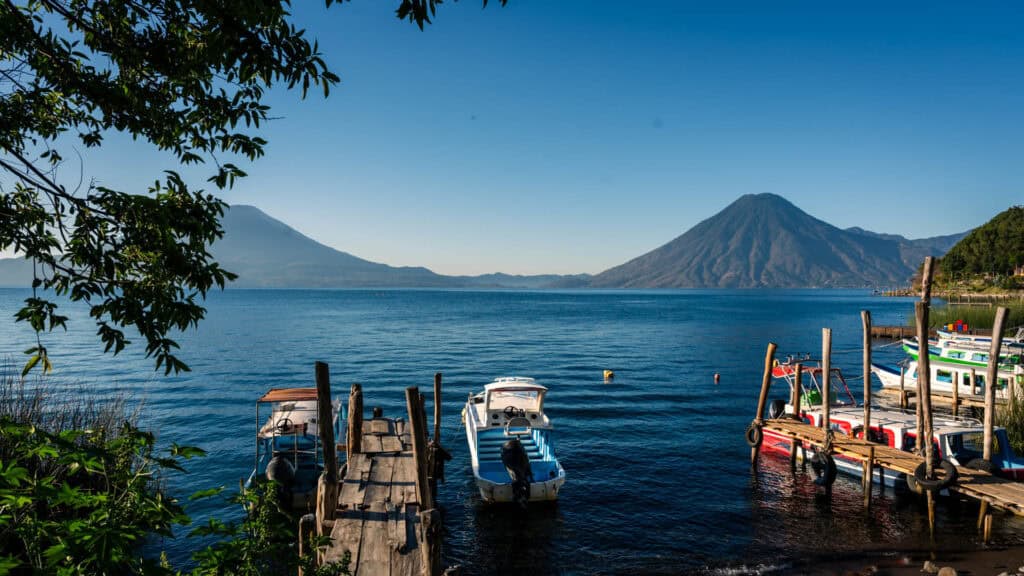
Lake Atitlan receives a lot of hype online, and it’s understandable why. A picture-perfect lake surrounded by small towns, each with its own distinct characteristics, cultures and activities. Where hailing a taxi is waving at the end of a pier, having a boat pull over and asking them if they’re going to the town you want to go to. Where there are volcanoes and mountains in the distance in every direction, and Amalfi coast style of hotels clinging onto rock faces around the lake. however for me, this wasn’t the 10/10 place that tie Tok makes it out to be. It is a fantastic place to relax and chill out, but for me, it misses that one big activity to really make it stand out. Whether that’s just where I’ve been spoilt by Acatenango, Semuc Champey and Tikal in the weeks prior or having expectations a little too high is equally likely. With that said, what should you do here, and which town should you stay in?
My first week here was spent in San Juan in a homestay with a local family and completing Spanish school every day. This was fantastic to get a much bigger insight into the way local people actually live, what problems they have day to day and how this is different from in Europe. This was a week to shift perspectives on a lot of values and beliefs from the UK for sure, and something I would urge anyone with enough time on their trip to do. San Juan Spanish school was a fantastic base for this as well; you learn 1 to 1, or in a small group if you would like to do it with someone you are travelling with. The school is set out in a garden, so you are always in open air and surrounded by trees and hammocks, which sets a perfect,t relaxed tone for you to learn in. The language is taught in a very different way here than in England, and my teacher spoke little to no English, so the learning curve was steep and at times frustrating. But I learnt so much in just one week, more than I realised at the time, with my Spanish being complimented several times afterwards by locals.

San Juan is a great place for this to be set, and the town offers many tours of the local products like chocolate, coffee and honey. In addition, the streets here are hugely colourful with murals everywhere through town and streets shaded by hanging sombreros or umbrellas. It is a truly authentic town where everyone is actually happy to have come from. The family I stayed with took great pride in their different lines of work and still live very much as a community comprising of family, friends and neighbours all helping each other in different ways; a stark contrast to how most live in the West.

The next town along is San Pedro la Laguna, which is the party town of the lake. It is the most touristic town on the lake and is filled with bars, restaurants and hostels. Mr Mullets is located here and is one of the most well-known party hostels in Central America for its pub crawl and boat party. However, for me, this hostel is a little too far down the party hostel vibe; the kind of place where the rooms are named things like the dictators or the lab and then each person’s bed is labelled a different dictator or type of drug. I stayed here one night for the pub crawl to have some fun after my Spanish school, and that was more than enough for me. If you’re not hungover, there are some good hikes you can do from here; both the volcano and the Indian nose hike; both are pretty good, but are a little let down after Acatenango. You do get high enough to wash Fuego erupt now and again just from a lot further away.
For the viral cliff jumping spot, head to San Marcos; here, there is the 12-meter jumping spot located inside the nature reserve, which charges 25 quetzals to enter. Besides the reserve, the town is a very hippie vibe with almost no one wearing shoes, a strong smell of incense and more coffee shops and yoga classes than you can count.
Santa Cruz is one of the most popular places to stay here because of the famous free curves hostel. Here, you get one hour of free beer every single night, hence the name. They also have big family dinners every night, and so it’s as easy as can be to meet new people and socialise. You stay in tents,s which are quite comfortable, but at night they can get seriously cold; wear a jumper to bed for sure. These don’t have privacy curtains or anything like that, and so it does generate a summer camp kind of vibe with everyone sitting around on their mattresses chatting into the night.
Their private rooms are small bamboo casitas with glass fronts, meaning you can wake up and look out onto the sunrise over the lake and surrounding volcanoes from your bed,d which looks perfect if you’re travelling with someone else.
The town itself here has nothing really to do other than a couple of short hikes, but the hostel provides. Great space to chill out during the day, sunbathe and paddle on the lake, and they have their own dock, so it’s pretty easy to grab a lancha and head out to the other towns of the lake.
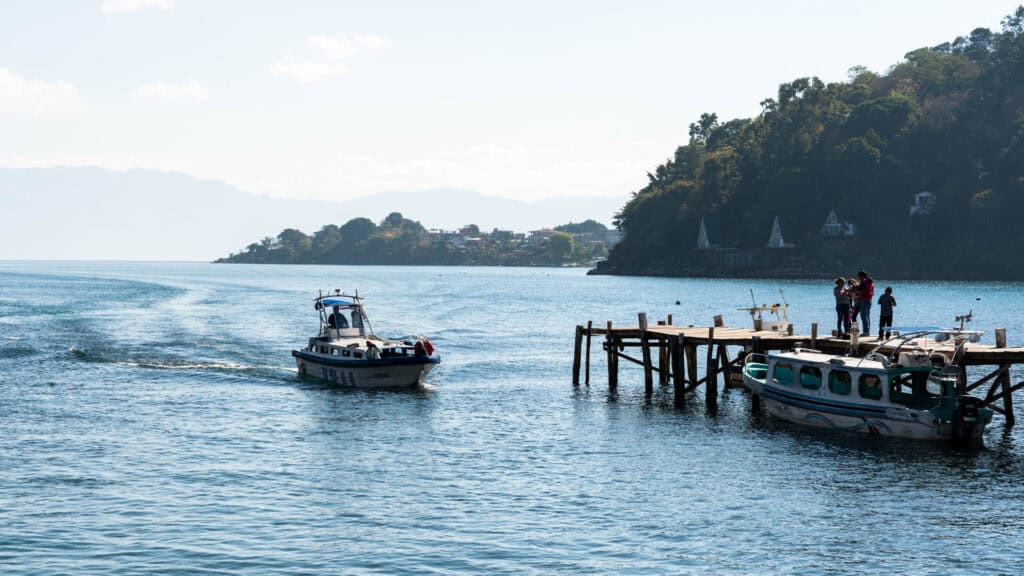

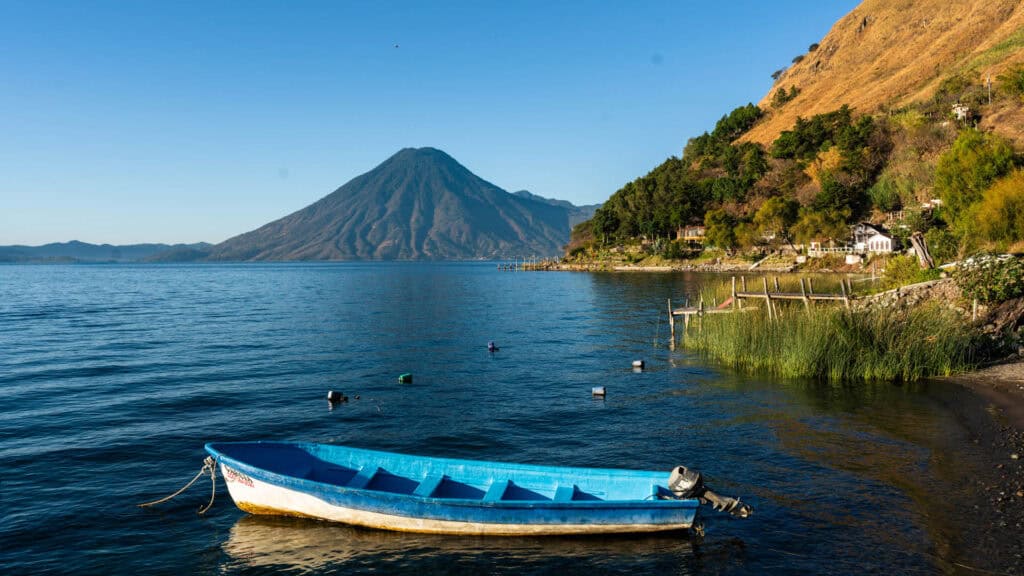
Panajachel is the biggest town on the lake and comes with the markets to match. Every Thursday and Sunday, they open up and are the perfect place to find some souvenirs to take back home, update the travel wardrobe or grab some street food. Just outside Panajachel is the Reserva Natural de atitlan which offers zip lining for between 300 and 450 quetzals, depending not he length ofthe course you take. Of course, this is also a nature reserve, and so you’ll see waterfalls and all kinds of wildlife whilst flying through the air; a little bit of adrenaline sprinkled into the relaxed vibe of the lake.
El Paredon
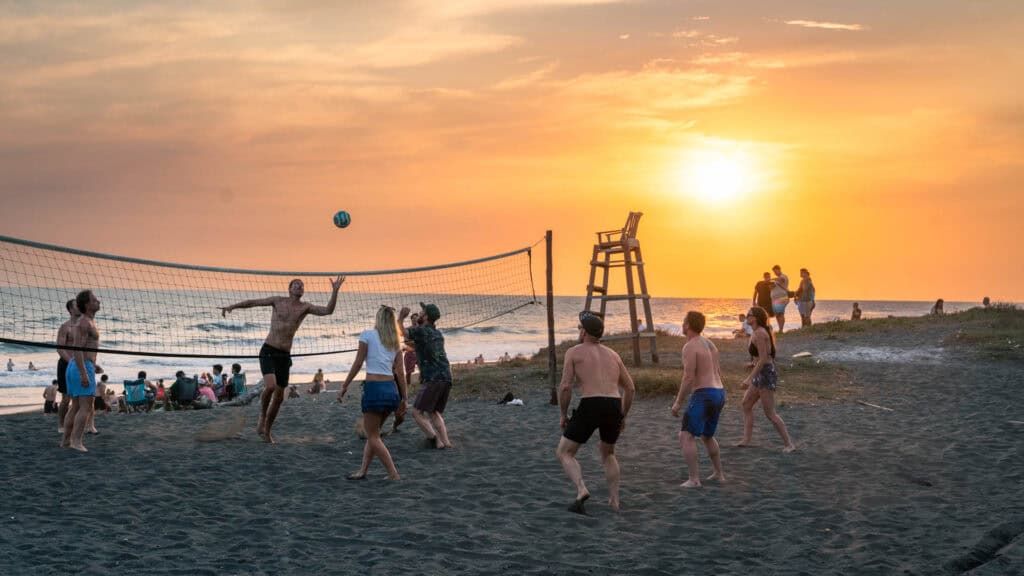
El Pardon was my first surf town of the trip, and boy, is it an unbelievable place. Slightly ironic that probably my favourite place in Guatemala, and my longest stay at 7 days, has the least for me to write about. My whole time here was spent living the same day on repeat. Get up, surf, eat an açai bowl, work or work out, eat tacos, chill out, play beach volleyball through the sunset and then party in the evening if you’re up to it. What more could a place need?
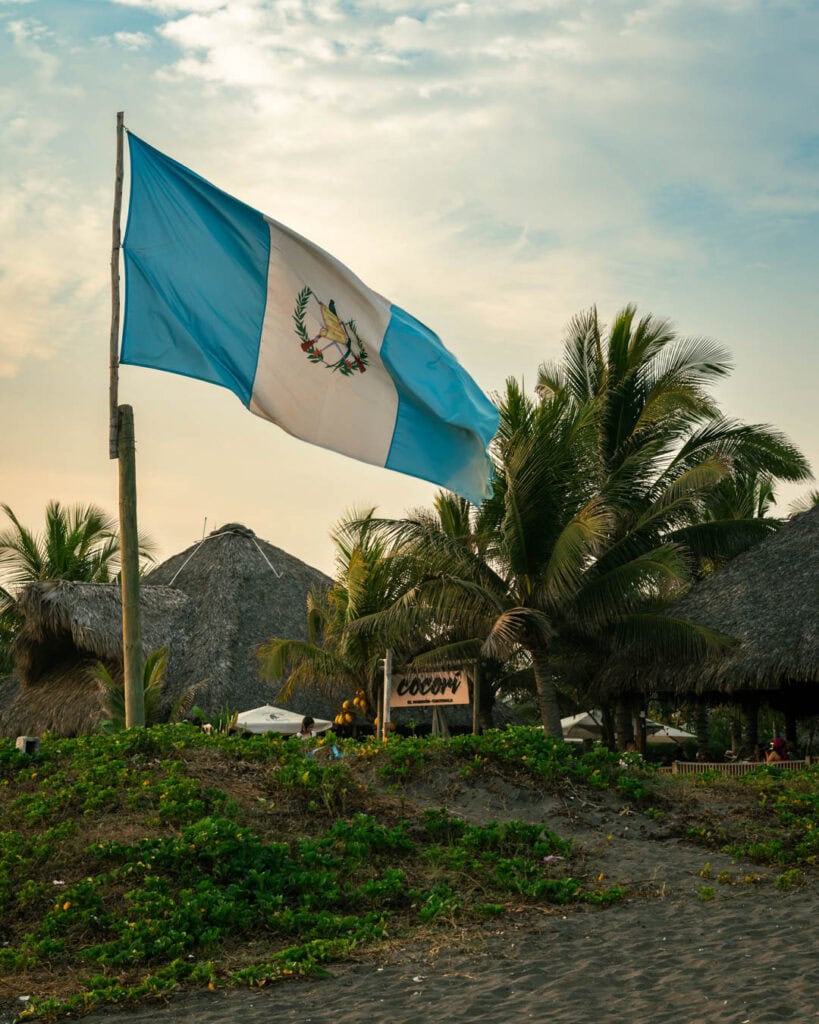
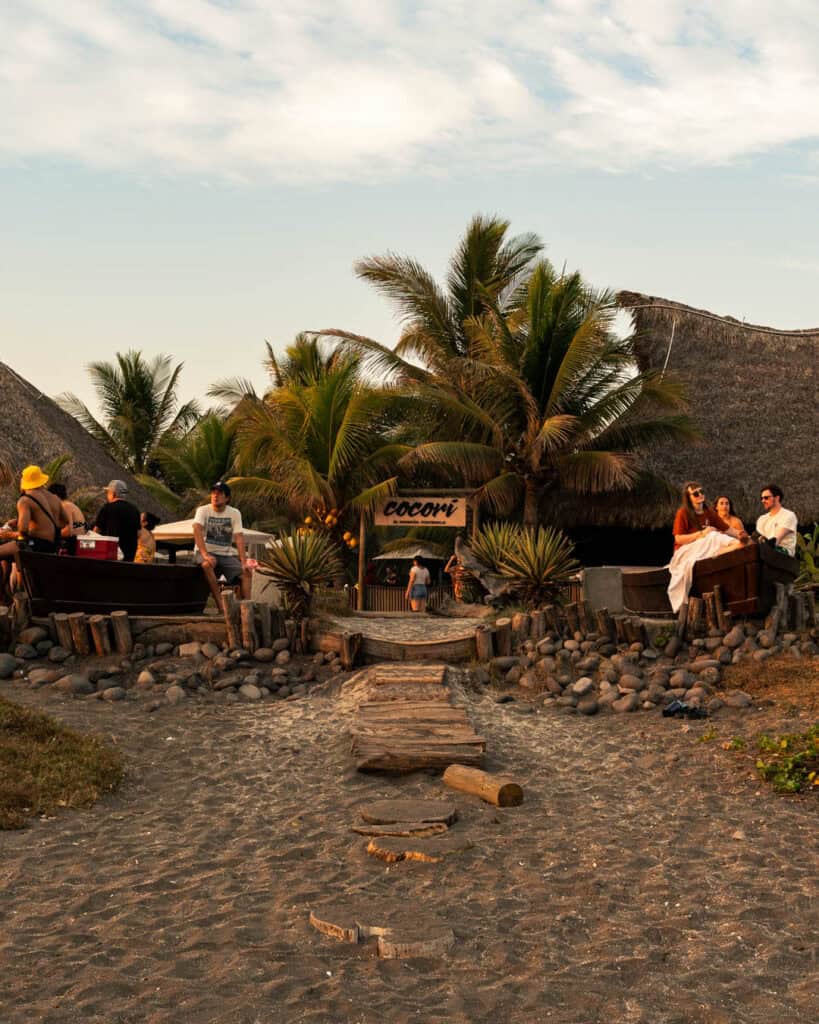
To top it off, the place is filled with good hostels. Mellow and Cocori top the list for most; Cocori for its luxury vibe, beach volleyball court, and beachfront location. Mellow for its social vibe, possibly the best hostel gym I’ve ever found and its great food. These are also the two most expensive hostels here, but there are some great hostels for cheaper as well. I preferred my stay at Mellow. Cocori is just a little bit too big for me, and at that size and number of people, I can make socialising harder, not easier, which is a little counterintuitive, but because of how much smaller Mellow’s social areas are its far easier to bump into the same people and get socialising.
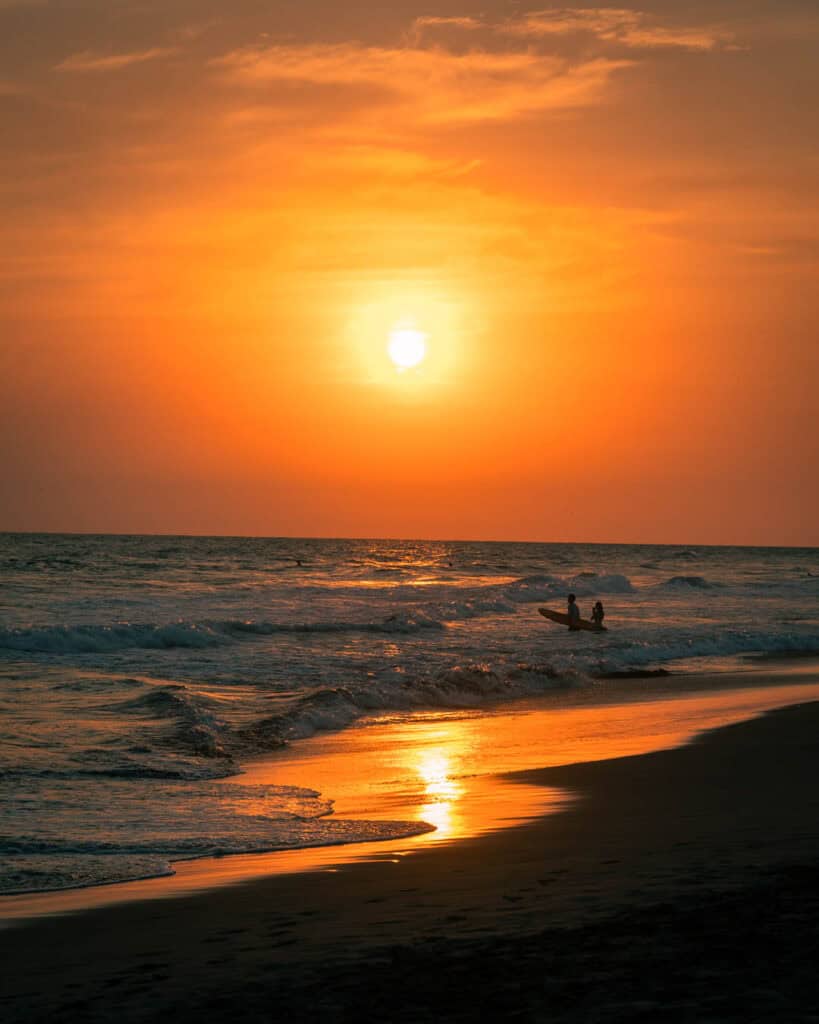
I can’t speak about El Paredon without mentioning the sunsets; unreal every single day right out over the ocean. The weather always seemed to be perfect, and the sun would slowly turn from yellow to orange to blood red right behind the sunset surfers and volleyball courts.
The surf here is good, great at times. It tends to be best on the transition from high to low tide. It’s a difficult place for intermediates to surf, though, as the waves break so abruptly, so you have to generate speed quickly to catch them well. A low tide here is fantastic for beginners, as there is plenty of whitewash to surf, and at times, out the back, there are some great waves for the advanced surfers out there. I rented from a little surf shop next to Cocori. Most hostels only rent out for a day or longer, whereas this shop you could just rent for a couple of hours, which made it a little cheaper. Their boards are also in better condition than those of the hostels.


This is also where I found the best parties in Guatemala, almost every night there is some event going on at one of the bigger hostels or at the beach clubs, and while most parties in the towns and cities only ran until midnight or 1 here there were parties all the way through until 4 am. The only downside of this is that the best surf is at 7 am, and so you have to choose every time between partying or surfing the next day, unless you’re one of those people who can get out and surf after 2 hours of sleep with alcohol still in your system, which unfortunately, I am not.
The food spots here are pretty endless for such a small town, but my favourite was the little taco stand just next to Super 24. They do 3 tacos de pastor for 25 quetzals (a little over £2) and their tacos de pulpo (octopus) are unbelievable. Cafecito del mar was my favourite for açai and coffee but it is a little on the expensive side.

