Is Nicaragua safe for tourists? In my experience, yes – but I would say it requires a little more awareness than some of the other countries I travelled through in Central America.
I spent time travelling independently through León, Granada, Ometepe and Popoyo as a solo traveller, and I would personally rate Nicaragua around 6–7/10 for safety. I never experienced theft, violence or any serious incident myself, and I never had a moment where I genuinely felt unsafe.
That said, Nicaragua did feel noticeably less comfortable than Guatemala, El Salvador, Costa Rica and Panama. I encountered people trying to sell me drugs several times, some streets in Granada felt sketchy after dark, and female travellers I met consistently mentioned catcalling as an issue.
The important thing is that most of the risks I encountered were manageable with pretty basic precautions. Keep your valuables secure, be sensible at night, don’t take unnecessary risks with scooters or alcohol, and you can still have an excellent time travelling Nicaragua.
Quick Facts: Is Nicaragua Safe?
- Overall safety: 6–7/10 (personal experience)
- Did I personally feel unsafe? No
- Theft: None experienced
- Violent incidents: None experienced
- Places I felt safest: Ometepe and Popoyo
- Place I felt least comfortable: Granada at night
- Biggest nuisance: Persistent drug sellers
- Female traveller concern: Catcalling
- Main transport concerns: Scooter accidents and transport scams
- Would I return? Absolutely
These are my personal impressions and experiences, not objective safety ratings.
Contents
- Is Nicaragua Safe for Tourists?
- My Experience Travelling Around Nicaragua
- Is Nicaragua Safe at Night?
- Is Nicaragua Safe for Female Travellers?
- Is Nicaragua Safe for Solo Travellers?
- Is Public Transport Safe in Nicaragua?
- Is It Safe to Rent a Scooter?
- Adventure Activities in Nicaragua
- What Are the Safest Places in Nicaragua?
- How Does Nicaragua Compare With Central America?
- My Nicaragua Safety Tips
- So, Is Nicaragua Safe?
- Nicaragua Safety FAQs
Is Nicaragua Safe for Tourists?
For most backpackers, I would consider Nicaragua generally safe with normal travel precautions, rather than somewhere you need to constantly worry about your surroundings.
I travelled around Nicaragua independently and never had anything stolen. I also didn’t hear of anyone I met having anything stolen during my trip.
The main thing that made Nicaragua feel less comfortable than somewhere like Costa Rica or Panama was not a constant threat of crime. It was more the occasional feeling that you needed to be a little more switched on.
The most obvious example was people trying to sell drugs.
I was approached several times by locals offering drugs, both during the day and at night. This happened particularly in Granada and León, although it was noticeably more persistent in Granada. Around the Treehouse party in particular, there were repeated approaches.
It never escalated beyond that. I simply declined and carried on.
That distinction is important. I wouldn’t describe Nicaragua as a place where I felt threatened walking down the street. It was more that certain interactions were more common than I was used to elsewhere in Central America.
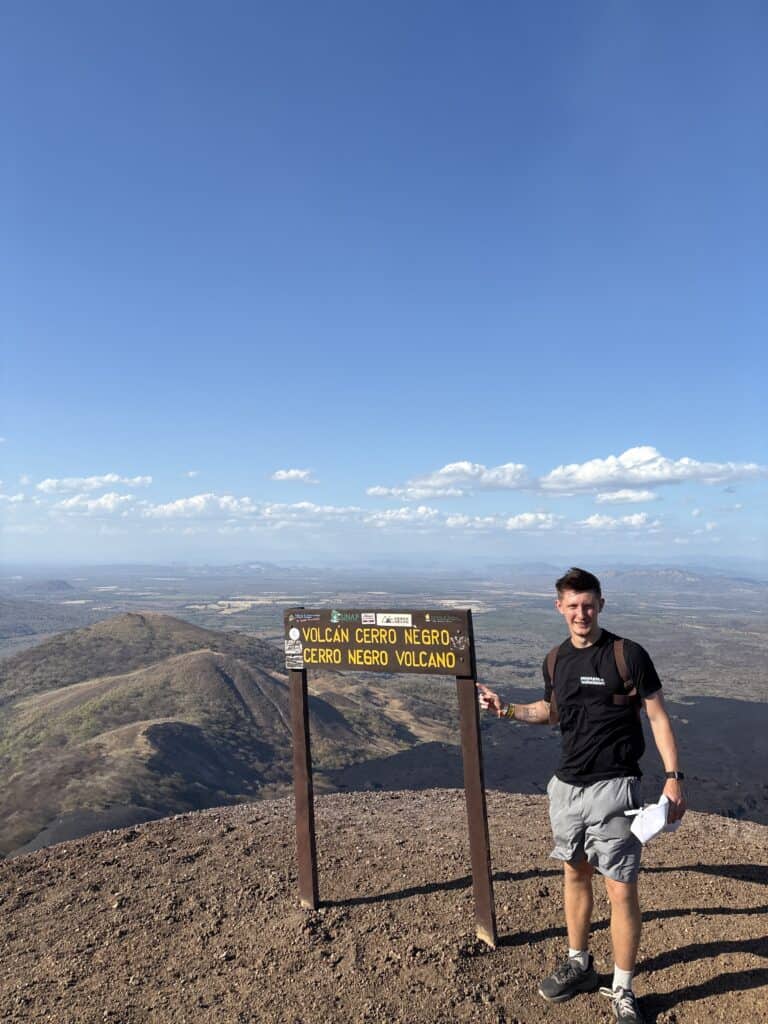
My Experience Travelling Around Nicaragua
I travelled through four very different destinations, and the feeling of safety varied quite noticeably between them.
León
León felt pretty safe to me.
Most backpackers tend to stay within a relatively small area around the main hostels, and I was no different. I spent most of my time within roughly a 5–10 block area rather than wandering all over the city.
Even after a full day of drinking following volcano boarding, I went out at night looking for food and had no problems.
We ended up eating from a street food truck, which turned out to be one of the highlights of the day. Despite having been drinking and being out after dark, I never felt particularly uncomfortable.
The main annoyance in León was the drug sellers. I was approached several times, but again, nothing ever came of it beyond someone trying to make a sale.
Granada
Granada felt slightly less comfortable to me than León, particularly at night. I still walked around after dark without having any problems, but there were a few streets where I was more conscious of my surroundings.
The biggest nuisance I experienced in Granada was people trying to sell drugs. This happened in both Granada and León, but it was noticeably more persistent in Granada, particularly around the nightlife areas and the Treehouse party. I was approached several times, sometimes quite persistently, but it never escalated beyond people trying to make a sale.
The Treehouse party itself didn’t feel particularly unsafe. The thing I’d actually be more conscious of is getting there and getting back.
The party is a fair distance outside Granada, so I’d strongly recommend using one of the shuttles organised by the party or your hostel. If you ignore those and try to arrange your own transport, getting there and back can be considerably more complicated, particularly after you’ve been drinking.
Even once the shuttle has dropped you off, there is a short walk of around 5–10 minutes uphill to reach the party. The path is pretty rugged, with large rocks and uneven ground, and you’ve got plenty of people making the walk while already drinking.
Several people I met ended up with sprained ankles.
So the biggest danger I encountered around the Treehouse wasn’t actually crime – it was a combination of uneven terrain, darkness and lots of drunk backpackers.
On the way back, the organised shuttle drops you around Boca de Boca, right in the middle of the main backpacker area. From there, it’s only a block or two to many of the popular hostels, so getting home is relatively straightforward if you’ve planned it properly.
I’d therefore still recommend the Treehouse experience. Just use the organised transport and take the walk seriously, particularly if you’ve already been drinking.
Ometepe
Ometepe felt completely different.
This was probably the place where I felt safest in Nicaragua. I explored independently several times and never had any problems.
The main safety concern here isn’t really crime – it’s riding scooters.
There were several travellers around me who had injuries from riding mopeds, and it is easy to see how it happens. If you aren’t confident riding one, don’t rent one simply because everyone else is doing it.
That said, I found riding around Ometepe relatively straightforward compared with some of the places I’ve ridden in Asia. The island is fairly flat, so I didn’t find the roads particularly intimidating.
The golden rule is simple:
Don’t get on a moped if you don’t know how to ride one, and absolutely don’t ride one drunk.
Popoyo
Popoyo felt very safe.
It’s a tiny surf town where the routine is basically:
Wake up → surf → eat → chill → repeat.
There isn’t really much opportunity to wander into the wrong part of town because there isn’t much town to begin with.
My biggest safety issue in Popoyo actually came from the ocean rather than people.
There is a rip current around the beach which nobody had warned me about. I got caught in it and ended up needing help from a local to get back in.
It was the first time I’d ever been caught in a rip current, and it was a good reminder that travel safety isn’t always about crime. Sometimes the biggest danger is simply not knowing the local environment.
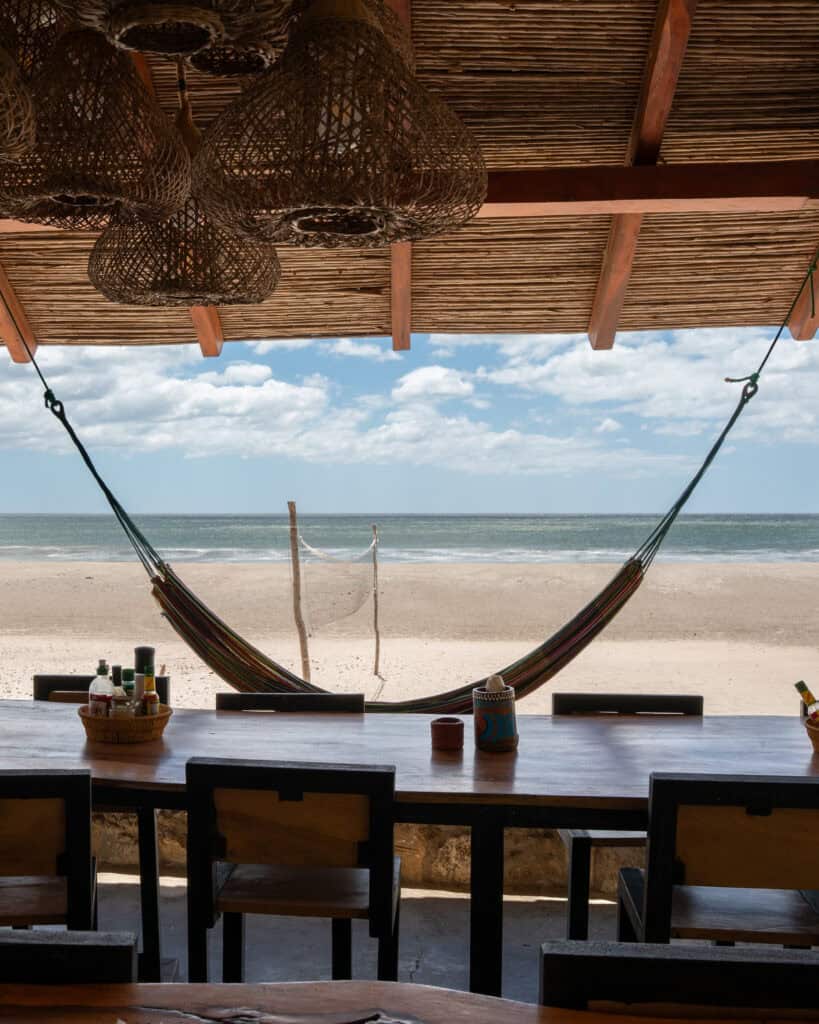
Is Nicaragua Safe at Night?
I would be more cautious at night than during the day, particularly in Granada.
That doesn’t mean I avoided going out. I drank a lot and experienced plenty of Nicaragua’s nightlife without anything happening to me.
In León, you will often end up back at Bigfoot Hostel anyway, so getting home isn’t really an issue if you’re staying around the main backpacker area.
The Treehouse party in Granada is also relatively straightforward if you use the organised transport. The shuttle drops you back at Boca de Boca, right in the centre of the popular hostel area, meaning you only have a short walk back afterwards.
Wet Wednesday can be slightly more awkward if you’re staying further away, as scooters are commonly used to get around. There are taxi operators, although I didn’t personally use them late at night, so I can’t comment on how easy or affordable they are.
My general rule would be:
Enjoy the nightlife, but make sure you know how you’re getting home before you start drinking.
If you’re somewhere unfamiliar, travelling with other people is also an easy way to reduce unnecessary risk.
Is Nicaragua Safe for Female Travellers?
This is probably the area where I would add the biggest caveat to my otherwise positive experience.
I personally didn’t experience this, but several female travellers told me that catcalling was very prevalent, particularly when they were walking around alone.
From what I was told, it could be quite persistent and uncomfortable.
Importantly, nobody I met told me that this had escalated into anything more serious. But that doesn’t make the experience pleasant, and it is worth acknowledging that my experience as a male traveller isn’t necessarily representative of everyone else’s.
So while I would absolutely recommend Nicaragua to female travellers, I would expect some women to find parts of the experience more uncomfortable than I did.
Is Nicaragua Safe for Solo Travellers?
I travelled through Nicaragua alone and had no problems.
In fact, one of the best things about travelling Nicaragua was how easy it was to meet other backpackers. I made some great friends along the way, and there was a strong enough backpacker scene that I rarely felt like I was genuinely travelling alone.
Meeting people also made some of the logistics easier.
Whether it was researching which bus to take, sharing taxis or simply having someone else around at night, travelling with people you meet can make things both easier and cheaper.
I wouldn’t say I felt unsafe when travelling alone. But I would still recommend making friends and travelling together when it makes sense, particularly at night or when arranging transport.
Is Public Transport Safe in Nicaragua?
I used a mixture of transport in Nicaragua, including:
- One organised shuttle
- One public bus
- Two taxis
The organised shuttle was straightforward and arranged through a hostel.
The public bus was also fine for me, although the usual advice applies: keep your bags and valuables close to you at all times.
I had no problems on public transport and didn’t hear of anything happening to anyone else I met.
There is, however, one transport scam worth knowing about.
The Granada to Ometepe route
I’d heard from other travellers about scams on the journey from Granada towards Ometepe.
In some cases, transport doesn’t take you all the way to the port. You can then find yourself being approached by taxi drivers who know you’re stuck and try to charge an excessive amount for the remaining journey.
I didn’t personally experience this, but it is worth knowing about before setting off.
My preference when travelling Nicaragua was therefore to lean towards private transport where the cost was reasonable, particularly when travelling with other people and splitting a taxi.
For more practical advice on getting around, see my Nicaragua transport guide.
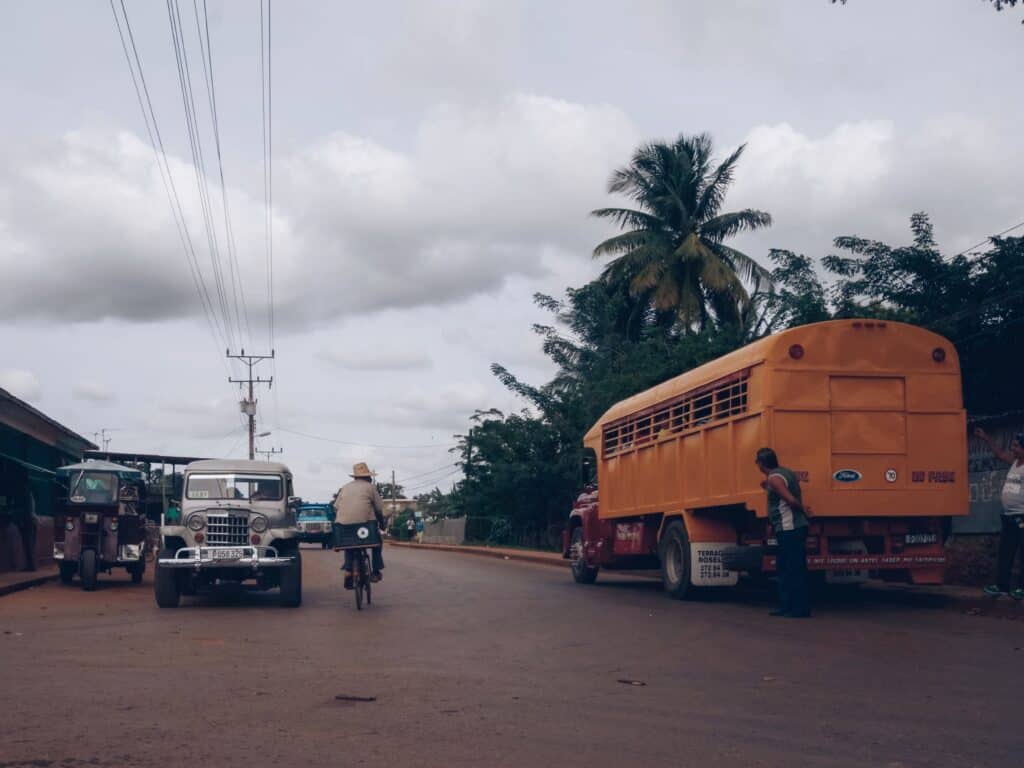
Is It Safe to Rent a Scooter in Nicaragua?
Yes – but only if you genuinely know how to ride one.
Ometepe is one of the places where renting a scooter is particularly tempting. It gives you the freedom to explore the island independently, and I personally enjoyed riding around it.
But I also saw several people with injuries from scooter accidents.
The biggest mistake would be assuming that because everyone else has rented one, you should too.
If you aren’t an experienced rider, don’t rent one.
And perhaps even more importantly:
Never ride a scooter after drinking.
This sounds obvious, but when you’re backpacking, drinking and then getting on a moped can become much easier to justify than it would at home.
Don’t.
Adventure Activities in Nicaragua
Some of Nicaragua’s biggest attractions involve adventure activities, and I generally felt very comfortable with the organised tours I did.
The one lesson I learned the hard way came while volcano boarding in León.
Make sure you actually wear your goggles.
I forgot mine initially and ended up getting sprayed in the eyes with rocks, dust and everything else coming down the volcano.
It was funny afterwards.
At the time, it was considerably less funny.
The organised experience itself felt safe, but adventure activities are still activities where basic safety equipment exists for a reason.
The same applies to surfing. My experience in Popoyo showed me that even when the town itself feels incredibly safe, the ocean can present a much more immediate danger.
If you’re surfing somewhere unfamiliar, ask locals about currents before getting in.
What Are the Safest Places in Nicaragua?
Based entirely on how I personally felt while travelling, I’d put Ometepe and Popoyo at the top.
Ometepe
Very relaxed, lots of independent exploration and I never felt uncomfortable. The main concern is scooter safety rather than crime.
Read my Ometepe travel guide for more about exploring the island.
Popoyo
Tiny, laid-back and centred around the surf community. Again, the ocean was a bigger concern for me than personal security.
Read my Popoyo travel guide for more about visiting this surf town.
León
Generally comfortable, particularly around the main backpacker area. I walked around at night without problems, although there were persistent drug sellers.
Read my León travel guide for more about the city and its famous volcano boarding experience.
Granada
Still perfectly manageable, but this was the place where I felt most conscious of my surroundings after dark. Some streets felt sketchier, and I’d be more inclined to stick with other travellers at night.
Read my Granada travel guide for more about the city and its nightlife.
How Does Nicaragua Compare With the Rest of Central America?
Nicaragua was actually the lowest-rated country for me personally when comparing the five countries I travelled through.
| Country | My personal safety rating |
|---|---|
| Costa Rica | 9–10/10 |
| Panama | 9–10/10 |
| Guatemala | 8/10 |
| El Salvador | 8/10 |
| Nicaragua | 6–7/10 |
That doesn’t mean I thought Nicaragua was unsafe.
Quite the opposite – I would absolutely recommend travelling there.
The difference is that Costa Rica and Panama in particular felt almost completely safe to me, while Nicaragua had more moments where I felt I needed to pay attention.
I think most of that uncertainty can be managed through basic backpacking precautions.
These ratings are entirely subjective, based on how I felt during my own travels. They shouldn’t be treated as an objective comparison of crime rates or current national safety conditions.
My Nicaragua Safety Tips
If I were travelling around Nicaragua again tomorrow, I wouldn’t actually change much about how I travelled.
I’d simply follow the same basic rules.
1. Keep your valuables secure
Use zipped pockets where possible and keep your phone, wallet and passport close to you. Don’t make yourself an easy target.
2. Keep valuables concealed
You don’t need to walk around displaying an expensive camera, phone or wad of cash. I’m not saying you need to hide everything, but being discreet is sensible.
3. Be more cautious at night
Particularly in larger cities such as Granada. You don’t need to lock yourself inside your hostel, but travelling with other people and sticking to areas you know makes sense.
4. Consider private transport
If a taxi or private shuttle is affordable, particularly when you can split the cost with other travellers, I would generally favour it over making a complicated public-transport journey.
5. Make friends
This isn’t just a social recommendation. Having other travellers around can make transport easier, reduce costs and give you someone to travel with at night.
6. Don’t ride a scooter beyond your ability
If you can’t confidently ride a motorbike, don’t learn while backpacking on a busy road. And never ride one drunk.
7. Ask locals about natural hazards
The rip current in Popoyo was a good reminder that locals often know things you don’t. Ask about currents before surfing, conditions before hiking and anything else you should know before heading into an unfamiliar environment.
So, Is Nicaragua Safe?
Yes – but I wouldn’t describe it as completely carefree.
My personal experience was overwhelmingly positive. I travelled Nicaragua alone, met loads of people, went out drinking, walked around at night, used public transport, rode a scooter and took part in adventure activities.
I never had anything stolen and never experienced a serious incident.
At the same time, Nicaragua felt noticeably less comfortable to me than Guatemala, El Salvador, Costa Rica and Panama. Granada could feel sketchy at night, drug sellers were persistent in Granada and León, and female travellers I met regularly mentioned catcalling.
For me, the important distinction is that most of these issues were manageable rather than reasons to avoid travelling.
If you use basic precautions, keep your valuables secure, make sensible decisions at night and don’t do stupid things like riding a scooter drunk, I think Nicaragua is a country most backpackers can comfortably enjoy.
And personally, I would absolutely go back.
Nicaragua Safety FAQs
Is Nicaragua safe for tourists?
Yes. Based on my experience, Nicaragua is generally safe for tourists who take normal backpacking precautions. I personally never experienced theft, violence or any serious incident.
Is Nicaragua safe for solo travellers?
Yes. I travelled around Nicaragua alone and had no problems. The backpacker scene also makes it easy to meet other travellers and find people to travel with.
Is Nicaragua safe for female travellers?
Generally yes, but female travellers may have a different experience from men. Several women I met told me that catcalling was very prevalent, particularly when they were alone. I didn’t hear of it escalating into anything more serious, but it could be uncomfortable.
Is Nicaragua safe at night?
Generally, yes, but I would be more cautious after dark, particularly in Granada. I walked around at night without incident, but some streets felt less comfortable than others. Staying around the main backpacker areas and travelling with other people is sensible.
Is Ometepe safe?
Ometepe felt very safe to me. I explored independently several times without problems. The main risk I would highlight is scooter accidents rather than crime.
Is Granada safe?
I felt comfortable in Granada during the day, while some streets felt a little sketchier at night. I never experienced an incident, but I’d take more care here after dark than I would in Ometepe or Popoyo.
Is León safe?
León felt pretty safe to me, particularly around the main backpacker area. I walked around at night without problems. The main nuisance I experienced was persistent offers of drugs.
Is Popoyo safe?
Popoyo felt extremely safe. It’s a tiny, laid-back surf town, and I never felt uncomfortable there. The bigger safety concern I experienced was a rip current that I hadn’t been warned about.
Should I rent a scooter in Nicaragua?
Only if you’re already confident riding one. I saw several travellers with injuries from scooter accidents in Ometepe. Never ride a scooter drunk.
Is public transport safe in Nicaragua?
I used public transport without experiencing any problems. Keep your bags and valuables close, and be aware of potential scams on certain routes, particularly when travelling between Granada and Ometepe.
Should I avoid travelling to Nicaragua because of safety concerns?
I wouldn’t. Nicaragua was the lowest-rated of the five Central American countries I travelled through for personal safety, but I still rated it 6–7/10 and would absolutely recommend travelling there. Basic precautions go a long way.
Planning a trip to Nicaragua?
Explore the rest of my Nicaragua travel guides to plan your route, budget and accommodation.